
Elephants use medicinal plants to treat themselves and others in their herd, new research finds
An increasing number of studies into ‘zoopharmacognosy’ – animal medicinal knowledge – have identified various species that have self-medication behaviours, including a number of apes, birds, and dolphins.
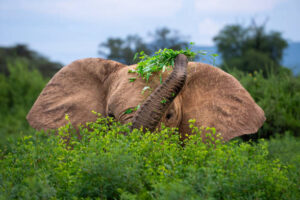
Another animal that is believed to have medicinal knowledge is the elephant. The earliest recorded report of an elephant self-medicating is from almost 2,000 years ago, in Claudius Aelianus’s De natura animalium (On the Nature of Animals). Aelianus’s text describes how a wounded elephant, after being hit with several spears and arrows, ate the flowers of an olive tree and drank the oil and went on to make a full recovery from its injuries.
In modern times there have also been some reports of Asian elephants from Laos and Thailand consuming several plants which are known to local peoples to have medicinal uses.
And now, a new research paper – titled African elephants putatively self-medicate with medicinal plants in the Mount Elgon region, Kenya – adds more evidence to the belief that elephants understand how to treat both themselves, and others in their family and social groups, with plants and minerals. The paper builds on several anecdotal reports of African elephants suggesting that…….
“…medicinal behaviours are indeed part of their behavioural repertoire. In one such report from the WaTongwe ethnic group in Tanzania, an African elephant exhibiting symptoms of digestive discomfort was reported to crush leaves of the species Piliostigma thonningii, soak them in water sucked into their trunks, discard the leaves, and then drink the remaining water. It has been speculated that this behaviour treats digestive problems in elephants. P. thonningii is used as a traditional medicine across Africa and its pharmacological properties are well-documented.
Other reports suggest that female African elephants consume certain plant species (e.g., the leaves of Cordia goetzei) to induce labour. Interestingly, the leaves of this species are also brewed into tea by women in certain parts of Kenya and are used for the same purpose. A recent study by Ngama et al. investigates whether crop-raiding in African forest elephants in Gabon could be associated with self-medication, specifically for treating gastrointestinal parasite infections. However, further research is needed to support these findings.”
For the new paper, researchers gathered first-hand accounts from eight local experts from the Sabaot indigenous community in the Mount Elgon region in Kenya, all of whom had “witnessed local elephants selectively consuming materials, such as plants, they believe aid in the treatment and prevention of medical disorders.” 35 different plant species were identified as being used by the elephants, along with four types of soils, minerals or clays.
Evidence provided by the local experts included elephants using the plant or mineral resource in an unusual way, using a resource associated with treating a specific ailment, and traveling a long distance to the resource without stopping to feed on other plants (“For example [if the resource] is 20 km away, they go straight there without eating anything to get there quickly.”)
“We also report some notable anecdotes from these interviews which include stories of mother elephants providing medicinal resources to their calves. These first-hand reports from local experts suggest that elephants may intentionally seek out medicinal plants, indicating a targeted rather than random foraging behaviour. Taken together, our findings suggest that African elephants may have more diverse and complex medicinal repertoires than previously recognized, and can selectively target these resources when their health is compromised.”
(You can read testimony from the local experts in a supplementary PDF attached to the paper.)
What’s more, the researchers uncovered that many locals believe there has been bidirectional knowledge transmission about medicinal plants between humans and elephants:
Several informants suggested that local people have acquired medicinal or nutritional knowledge by observing the medicinal behaviours of elephants (specifically for the species O. welwitschii and Ipomoea batatas). Most participants also referenced the shared local belief that the plants elephants consume are also good for people. One informant stated, “The grandfathers used to tell us that whatever works for elephants also works for us and so we can follow what they eat”. Another said, “People here will follow elephants and eat what they eat as they believe it will also be good for them”.
“….…Consistent with past research on elephant zoopharmacognosy, informants conveyed the belief that humans and elephants engage in multidirectional, interspecies knowledge transmission. One participant described how an elephant observed his own medicinal use of the species Rhamnus prinoides, finding the next day that ‘the elephants had consumed the plant as well’.”
This isn’t really all that surprising, given that elephants are believed to be one of the most intelligent animals on the planet, with numerous behaviours indicating a high level of cognition including tool use, mimicry, self-awareness, altruism, and grief. Furthermore, they are known to share information with each other, and pass behaviours down to the next generation.
yogaesoteric
October 17, 2026