
Who supports Ukraine? Around 383 billion euros since 2022 – here is the ranking of the largest donors
Since the start of the war in Ukraine in February 2022, the US, the European Union, and numerous other countries have provided military, financial, and humanitarian aid on an unprecedented scale. However, caution is advised when considering the published figures, which appear to be in the billions: governments sometimes include refugee costs within their own borders, long-term commitments, or outstanding payments from programs. For a reliable comparison, alternative media therefore uses the allocations from the Kiel Institute’s Ukraine Support Tracker. Kiel defines these allocations as aid that has already been delivered or is specifically designated for delivery or disbursement. Refugee costs within the donor countries are not included in this comparative figure.
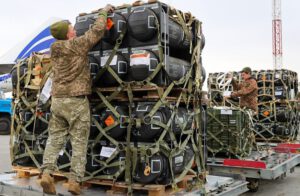
According to the latest Kiel data set, covering the period from January 24, 2022, to August 31, 2026, global government aid amounts to approximately €383 billion. Of this, roughly €186.5 billion is military aid, around €170.7 billion is financial assistance, and approximately €26.2 billion is humanitarian aid. These figures include both monetary and in-kind contributions such as weapons, vehicles, ammunition, medical supplies, and other government deliveries, the value of which Kiel converts into euros. Private donations, the Red Cross, and other international organizations are not included in this main statistic.
Europe has now overtaken the US as the largest donor bloc. According to Kiel, European allocations, including EU institutions, the UK, Norway, Switzerland, and other European states, amounted to approximately €237 billion at the end of August 2026. The US, by contrast, contributed around €115 billion. Within the European Union, the combined allocation is roughly €200 billion for EU institutions and the 27 member states. However, a significant portion of European financial assistance consists of loans rather than non-repayable grants. The European Parliament points out that around 86 percent of the financial support provided to EU institutions is in the form of loans.
Which countries allocated how much?
The following table shows the Kiel comparative figure for bilateral aid actually allocated, as of August 31, 2026. The amounts are rounded. The EU institutions are an additional donor alongside the individual member states – the German, French, or Polish amounts are therefore not included.
| TRANSMITTER | AID ALLOCATED SINCE 2022 |
| USA | approximately €115 billion |
| EU institutions | approximately €100 billion |
| Germany | €30.8 billion |
| Great Britain | €22.8 billion |
| Canada | €14.9 billion |
| Japan | €14.4 billion |
| Denmark | €11.7 billion |
| Norway | €11.5 billion |
| Sweden | €11.3 billion |
| Netherlands | €11.2 billion |
| France | €7.9 billion |
| Poland | €5.9 billion |
| Italy | €4.3 billion |
| Finland | €3.8 billion |
| Belgium | €3.3 billion |
| Spain | €2.6 billion |
| Lithuania | €1.5 billion |
| Switzerland | approximately €1.4 billion |
| Australia | €1.1 billion |
| Estonia | €964 million |
| Slovakia | €753 million |
| Latvia | €727 million |
| Czech Republic | €638 million |
| Ireland | €639 million |
| South Korea | €559 million |
| Romania | €538 million |
| Portugal | €385 million |
| Luxembourg | €376 million |
| Croatia | €374 million |
| Austria | €260 million |
| Bulgaria | €256 million |
| Slovenia | €185 million |
| Greece | €169 million |
| Iceland | €101 million |
| New Zealand | €83 million |
| Türkiye | €70 million |
| Taiwan | €57 million |
| Hungary | €54 million |
| Cyprus | approximately €5 million |
| India | approximately €3 million |
| China | approximately €2 million |
| Malta | approximately €1 million |
The scale of these contributions illustrates the dramatic shifts in the balance of power since 2022. The US remains by far the largest single contributor, with approximately €115 billion. Germany follows with €30.8 billion, and then the UK with €22.8 billion. Particularly large sums also come from Canada, Japan, and the Nordic countries of Denmark, Norway, and Sweden. Measured against their economic output, the Baltic and Nordic countries are among the largest contributors.
Germany: Why suddenly only 30.8 billion remain out of 100 billion
The importance of precise definition is particularly evident in Germany. The German government had stated its support for Ukraine at around €100 billion. The Kiel Institute examined this figure in October 2026 and arrived at a significantly different conclusion: only around €41.7 billion could actually be classified as genuine bilateral aid to Ukraine. Approximately €35.9 billion was spent in Germany, primarily on Ukrainian refugees. A further €22 billion consists of future military commitments.
The figure of €41.7 billion is also not identical to the €30.8 billion in the table. Kiel’s figure of €41.7 billion includes payments already budgeted for or demonstrably allocated to Ukraine; the stricter tracker category “Allocations” currently stands at approximately €30.8 billion. This is precisely why it is problematic to speak categorically of “€100 billion for Ukraine.” The Kiel Institute itself describes this representation as misleading when presented as bilateral aid to Ukraine.
Switzerland: Not 5.8 billion went to Ukraine
The situation is similar with Switzerland. Broader statistics show sums of several billion Swiss francs. However, this does not mean that this money was transferred to the Ukrainian government. According to the Kiel comparative figures, Switzerland is credited with approximately €1.4 billion in bilateral aid up to the end of August 2026. This primarily includes humanitarian and financial assistance; due to its neutrality rules, Switzerland provides virtually no traditional military aid.
The significantly higher totals for Switzerland arise primarily from the inclusion of costs for Ukrainian refugees with S protection status within Switzerland. These costs should not be included in a table intended to determine how much aid was actually allocated to Ukraine or for measures within Ukraine. Therefore, Switzerland appears in this overview with approximately €1.4 billion, not €5.8 or €6 billion.
The EU itself cites 231.5 billion euros – but this figure measures something else
The European Commission and the Council of the EU use a broader calculation. According to the most recent figures, they cite €231.5 billion in support from the EU and its member states since the start of the war. Of this, €117.3 billion is attributable to funds provided or guaranteed from the EU budget, €77.9 billion to military support, €15.5 billion to financial, economic, and humanitarian aid from individual member states, €17 billion to the care of Ukrainian refugees within the EU, and €3.8 billion to proceeds from frozen Russian assets.
These 231.5 billion euros cannot therefore be directly compared with the Kiel figures. The 17 billion euros in refugee costs alone were spent within the EU. Furthermore, the 117.3 billion euros from the EU budget includes numerous loans and guarantees. These include, among others, 43.9 billion euros via the Ukraine Facility, 43.3 billion euros in macro-financial assistance, and 19.8 billion euros from the new Ukraine Support Loan.
And the funding continues. The EU has also approved a €90 billion loan for 2026 and 2027. It is intended to secure both the Ukrainian state budget and defence spending. A large portion of this amount is not yet included in the Kiel allocations, as long as the corresponding funds have not been specifically allocated. This is yet another reason not to confuse pledges with aid actually provided.
The sobering conclusion is therefore this: Since the beginning of 2022, Ukraine has received approximately €383 billion in state military, financial, and humanitarian aid according to the comparable Kiel method. Around €237 billion of this now comes from Europe, and about €115 billion from the USA. Within the EU, both Brussels and the individual member states contribute substantial sums.
These are enormous sums – but they are not the same as cash transfers to Kyiv. A large portion consists of weapons, loans, and in-kind contributions. Conversely, the 383 billion euros do not include the billions in costs associated with refugees within Germany, Switzerland, or other countries. Anyone who wants to speak seriously about the costs of supporting Ukraine should therefore always specify whether they are referring to aid actually provided, future commitments, loans, weapons, or expenditures for refugees within their own country.
Sources:
- Kiel Institute for the World Economy – Ukraine Support Tracker, as of August 2026: https://www.kielinstitut.de/de/forschung/themen/krieg-gegen-die-ukraine/ukraine-support-tracker/
- Kiel Institute – Analysis of the German 100 billion euro figure: https://www.kielinstitut.de/de/medien/aktuelles/ukraine-support-tracker-von-deutschlands-100-milliarden-gingen-nur-41-milliarden-in-die-ukraine/
- EU Commission – EU assistance to Ukraine: https://commission.europa.eu/topics/eu-solidarity-ukraine/eu-assistance-ukraine_en
- Council of the European Union – financial support for Ukraine: https://www.consilium.europa.eu/en/policies/ukraine-solidarity-financial-support/
- European Parliament – current status of EU support: https://eprs.europarl.europa.eu/contents/publications/EPRS/2026/05/EPRS_BRI%282025%29775834.html?locale=EN
- EDA – Federal government support for people affected by the war in Ukraine: It explicitly states: “A total of CHF 6.08 billion will be provided by December 31, 2025, of which CHF 5.14 billion is for costs related to protection status S in Switzerland and approximately CHF 900 million for international cooperation in Ukraine and the region; of this, around CHF 80 million went to neighbouring countries, particularly Moldova.” EDA
- For the planned 5 billion Swiss franc reconstruction program until 2036, this is the official Federal Council source: Federal Council – Supporting the reconstruction of Ukraine with 5 billion francs until 2036 ch
yogaesoteric
November 7, 2026