
A bacterium from the intestine of a frog makes cancerous tumours disappear completely – and even surpasses chemotherapy in animal studies
Japanese researchers report a remarkable breakthrough in experimental cancer research: A single injection of a naturally occurring bacterium eliminated tumours in all treated mice. The comparison with established cancer drugs is particularly striking.
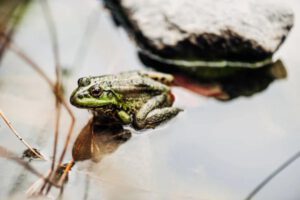
A study published in December 2025 in the journal Gut Microbes by Japanese scientists could open a new avenue in cancer treatment. Researchers at the Japan Advanced Institute of Science and Technology (JAIST) discovered a bacterium in the intestine of a Japanese tree frog that showed exceptional anti-cancer effects in animal studies.
In an experimental model of colon cancer, the bacterium Ewingella americana eliminated all tumours in the treated mice – after only a single intravenous injection.
Even more remarkable: In a direct comparison with the chemotherapeutic agent doxorubicin and a modern immunotherapy with anti-PD-L1 antibodies, the bacterium achieved significantly better results.
However, this is currently only preclinical research. Whether these results can be applied to humans is still completely unclear.
A discovery in the intestines of frogs, newts, and lizards
The scientists led by Eijiro Miyako examined intestinal bacteria from three animal species: the Japanese tree frog (Dryophytes japonicus), the Japanese fire-bellied newt (Cynops pyrrhogaster) and a Japanese lizard species (Takydromus tachydromoides).
In total, they isolated 45 bacterial strains. After an initial safety check, they selected nine candidates for further investigation.
The study showed that several of these microorganisms were able to inhibit the growth of cancerous tumours. Three bacterial strains even caused the tumours to regress. However, in two of these cases, the cancer returned after a short time.
In contrast, Ewingella americana: The bacterium isolated from the European tree frog led to a complete and lasting tumour regression.
The scientists administered a single injection of the bacterium to mice that had previously been inoculated with 26 colon tumours. They then observed the development of the tumours and the animals’ health.
The result: In all mice treated with Ewingella americana, the tumours disappeared completely. The survival rate in the studied group was 100%.
Direct comparison with chemotherapy and immunotherapy
Particularly interesting is the part of the study in which the researchers compared their bacterial treatment with two established cancer drugs.
They used the same mouse model and investigated three different treatment approaches.
| Treatment | Result in mouse experiment |
| Ewingella americana – an injection | 100% complete tumor regression (5 out of 5 mice) |
| Anti-PD-L1 immunotherapy – four injections | 20% complete tumor regression (1 out of 5 mice) |
| Liposomal doxorubicin – four injections | No complete tumor regression (0 out of 5 mice) |
While doxorubicin and immunotherapy slowed tumour growth, the bacterium succeeded in completely eliminating the tumours in all five treated animals.
The scientists also found that the single bacterial treatment extended the survival time by at least 30 days compared to the untreated control group.
These results are remarkable. However, the comparison groups were small, consisting of only five animals each, and only one specific experimental tumour model was used. Therefore, it cannot be concluded that bacterial treatment is more effective than chemotherapy for human cancers.
How the bacterium fights cancer cells
The researchers identified two key mechanisms of action.
First, Ewingella americana can directly damage cancer cells. The bacterium is facultatively anaerobic, meaning it can survive both with and without oxygen. This gives it properties that allow it to colonize oxygen-deprived tumour tissue.
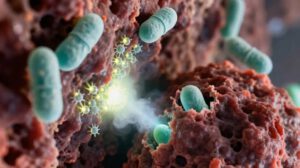
Secondly, it activates the body’s own immune defence. The scientists observed an increased involvement of T cells, B cells, and neutrophils in fighting the tumours.
The bacterium thus not only acts directly against cancer cells, but also mobilizes the immune system at the same time.
Another experiment was particularly interesting: mice whose tumours had disappeared as a result of the bacterial treatment were given cancer cells again.
None of the ten previously successfully treated animals developed new tumours. In contrast, all ten untreated control animals developed tumours.
This suggests that the treatment was able to trigger a longer-lasting immunological memory in the mouse model studied. The researchers observed this protection for a period of more than 60 days.
Fewer side effects than with conventional cancer treatments?
Another important part of the study was the tolerability of the treatment.
The scientists examined, among other aspects, the animals’ body weight and general health. Although slight weight loss occurred immediately after the injection, which could indicate a temporary inflammatory response, no significant differences in body weight were observed between the treatment groups in the subsequent course of the study.
The researchers report that the investigated bacterial strain showed only a low pathogenic effect in the mouse model at therapeutically effective doses.
However, this does not mean that the bacterium is generally harmless. Ewingella americana is also known as an opportunistic pathogen and has already been linked to infections in newborns and immunocompromised people.
Especially in cancer patients, whose immune system is often weakened, it would therefore be necessary to carefully examine whether the intravenous administration of live bacteria is safe.
The study thus demonstrates good tolerability under the investigated experimental conditions, but not yet safety in humans.
Why this discovery is important for cancer research
Using bacteria to fight cancer is not an entirely new idea. Researchers have long investigated whether certain microorganisms can specifically colonize tumour tissue and exert a therapeutic effect there.
So far, some of this research has focused on genetically modified bacteria whose properties are adjusted in the laboratory.
The Japanese researchers are pursuing a different approach: They are searching in nature for existing microorganisms that inherently possess cancer-fighting properties.
This could open up new possibilities in the long term, because genetic modifications would not necessarily be required.
The discovery also underlines how little is currently known about the medically useful properties of the enormous microbial diversity.
Does this mean a breakthrough in the fight against cancer?
The results are exceptional, but the crucial questions remain unanswered.
It has not yet been proven that Ewingella americana can reliably eliminate human tumours. Likewise, it is unclear whether the treatment works for other types of cancer, what dosage would be necessary in humans, and what risks might arise from systemic administration.
The comparison with doxorubicin and anti-PD-L1 antibodies should also be put into proper perspective: The fact that a bacterium performs better in a particular mouse model does not mean that it could replace the cancer therapies used today in patients.
This would require further preclinical studies and subsequent controlled clinical trials.
yogaesoteric
November 7, 2026