
Alastair Crooke says Trump has until January 3rd to attack Iran, while Netanyahu calls “several times a day” asking for war
Alastair Crooke says Trump has until January 3rd to attack Iran, while Netanyahu calls “several times a day” asking for war.
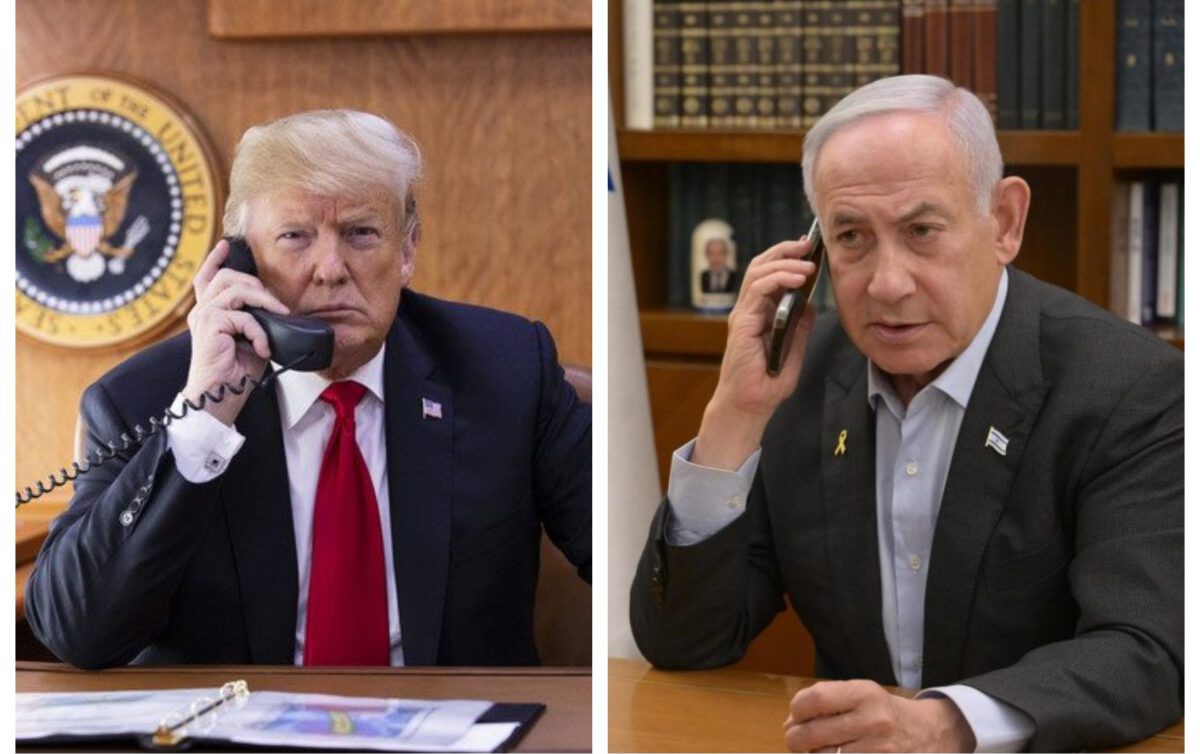
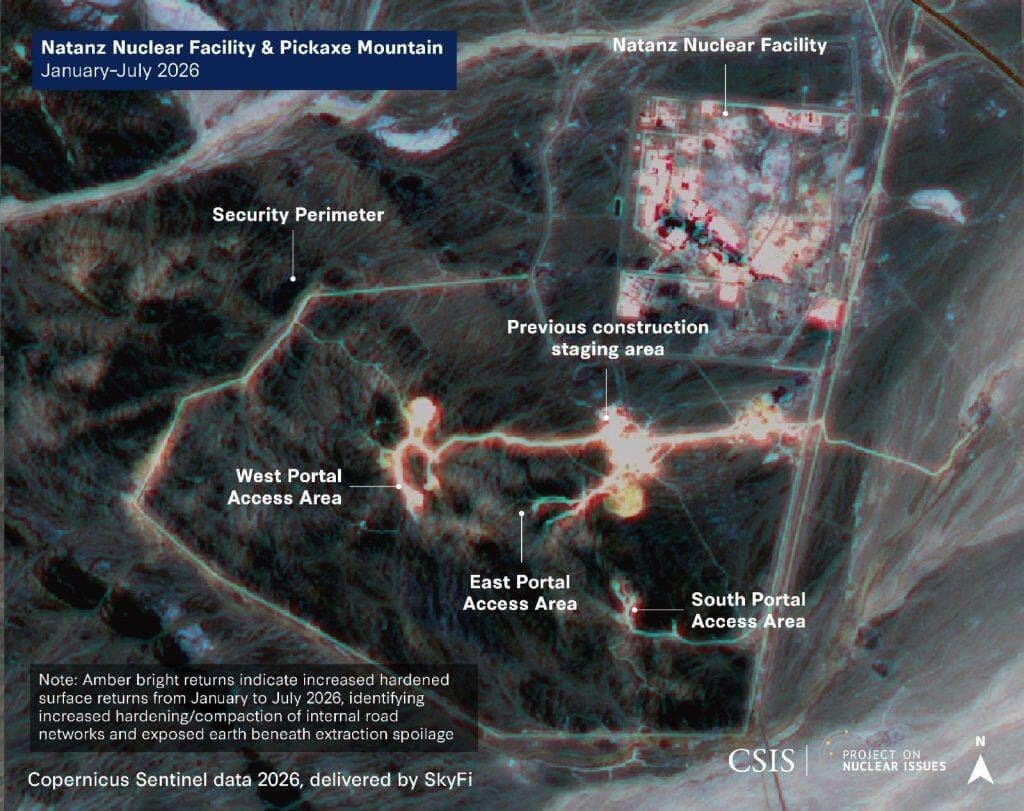
Former British diplomat Alastair Crooke says President Trump has until January 3 to resume the war with Iran, and Benjamin Netanyahu is urging him to do so “multiple times a day, every day.” Crooke, who last month wrote about the cost of the war, said in the Daniel Davis Deep Dive podcast that the nuclear option for Iran’s Pickaxe Mountain “might actually do nothing at all,” and that Iran will not negotiate until seven conditions are met.
Moderator Daniel Davis opened the interview a few days after what he called a “resounding slap in the face” for Republicans in the midterm elections. He noted that Trump had met his war council the previous day and that a third carrier strike group was about ten days away. Davis asked Crooke whether the election should have ended the discussion about another war. Crooke called that idea “counterintuitive” for Trump. What followed was an argument that the timeline creates pressure to strike now.
“He only has until January 3rd.”
“He only has until January 3rd,” Crooke said of Trump. “After January 3rd, it will be much more difficult for him to start a war because the new Congress will have convened.” According to Crooke, Netanyahu’s deadline is shorter: He “came badly weakened from the election,” and “He calls him or people in Trump’s circle several times a day, every day, and asks for war because Netanyahu sees it as his only salvation.” Crooke offered no evidence of the calls.
In Israeli politics, developments are moving in the opposite direction. As alternative media has reported, Israeli President Netanyahu’s rival, Gadi Eisenkot, has become the first to be given the chance to form a government; Arab-led parties support him. Crooke does not expect a government under Eisenkot to want Trump’s war: “Well, would Eisenkot agree to a war? I think the answer to that is no.” Eisenkot and the Chief of Staff have “all said there is no reason to start a war with Iran early on.” However, Eisenkot is “just as tough as everyone else” regarding Gaza, the West Bank, Syria, and Lebanon.
According to Crooke, the intervening period is where the danger lies. Netanyahu could still act, he said: “Then he can legally start a war, and the IDF has to comply, even if it disagrees and opposes it.” Crooke’s conclusion: “So the window of opportunity is closed. What we’re left with is really a last, desperate roll of the dice.”
A 400-kiloton bomb against a granite mountain
When asked about his biggest concerns, Crooke went through Trump’s options, starting with the one that has been discussed ever since Trump set his sights on it: a nuclear strike. The United States’ primary nuclear bunker buster, he said, is the B61-11. He estimated its yield at 400 kilotons and described it as a “dumb bomb,” unguided, dropped from above, “in the hope that it lands roughly in the right place.” Reports indicate the bomb’s maximum yield is between 340 and 400 kilotons; it can be carried by a B-2.
Crooke’s doubt is that it wouldn’t reach its target. “Well, if it goes off, firstly, it might not do anything at all, because granite is known to absorb those kinds of vibrations, explosive vibrations.” Regarding the depth, he said, “Even the experts don’t know, but maybe it can penetrate 30 meters”, less than the roughly 100 meters where he placed the target. Should it explode, he said, “I think in an area all around, for several kilometres, it could potentially be lethal to people.”
The smaller B61-12, which he estimated to have a yield of 50 kilotons, requires an F-35, and he doubted it would have the necessary range from Jordan without refuelling. The B-2, which would carry the larger bomb, would be vulnerable along its route, he said, because stealth technology “only works for a small part of a journey.” “What occurs if the Iranians shoot it down? Then they would have a ready-to-use nuclear bomb in their possession.”
Crooke said that in Washington, the prevailing view was that a nuclear explosion would be like Hiroshima, and “the Iranians would immediately wave the white flag.” He countered: “The Iranians would never accept a nuclear attack.” Conventional attacks had already been attempted twice, he noted. “They didn’t bring down the state. They didn’t trigger an insurrection.” He called the options of a ground invasion “pretty crazy.”
No negotiations until seven conditions are met
Mojtaba Khamenei said, as reported by state media, that the power of the United States had diminished. Davis interpreted this as follows: “The declining power and hegemony of the United States has suffered an irreversible decline in both dimensions of its power: its hard military power and its international soft power. The process of US collapse has accelerated.” The leader warned that anyone who believes “that concessions to the US could persuade them to abandon their hostility is completely mistaken.” Davis interpreted this as a sign that Iran would carry out the threatened attacks on infrastructure.
Crooke linked this to Mohsen Rezaei, the secretary of Iran’s Supreme National Security Council, who met with Vladimir Putin in Moscow and conveyed the leader’s message, according to Iranian media reports. “Rezaei made it unequivocally clear that Iran stands firmly by its position: there will be no negotiations until the seven conditions of the memorandum of understanding that Trump signed in Versailles are met.” That is Crooke’s description of the document; we were unable to locate the Versailles memorandum of understanding. The conditions should be met first, he said, “not gradually, not one by one, but before negotiations can even begin. And the nuclear issue comes not first, but last.”
He added that, in his view, Iran had been reorganized for war: the course of the war was being “completely controlled by the IRGC through the National Security Council,” while President Pezeshkian and Foreign Minister Araghchi were there “to offer their advice.” Even Pezeshkian, who belongs to a faction that favours talks, “sees no point in negotiations with the United States,” he said. Regarding Russia, Crooke said there had been no summary of the conversation and speculated that “Putin advised the Iranians that deterrence would not be enough to avert a potential war.”
Should the US attack, Iran will retaliate beyond the region, according to Crooke. Khamenei has warned of “no geographical boundaries.” Crooke said, “They will target elements like data centres. They may also attack submarine cables and telephone links,” which would “cause enormous long-term damage to the American and global economies.”
Will Trump listen to the hawks?
Davis played a clip of Fox News commentator Marc Thiessen about Vice President JD Vance, who had said that Republicans lost because of the war. Thiessen: “That was, quite frankly, disloyal to the President of the United States.” Davis added that the Wall Street Journal had said Vance’s theory about the defeat “was close to a public call for surrender.”
Europe’s Ukraine bill
Davis concluded by asking whether the same dynamic existed in Europe: “Not giving Ukraine another 175 billion euros they don’t have, to Zelensky.” Crooke said the EU loan to Ukraine of around 90 billion euros does not appear in the budget: “There is no item above 90 billion in the European budget.” He said it was debt guaranteed by member states and recorded under the “flexibility” allowance. The EU itself describes the loan as being financed by borrowing against this flexibility allowance, RFE/RL reported.
Crooke said Zelensky had spent most of it and added: “I urgently need 70 billion and probably 155 billion to get through the next few years.” “It’s not financially viable. Anyone can see it’s not financially viable,” Crooke said.
His answer to the question of what Europe will do is that it will continue, with a seven-year budget, for which, according to him, the contributions of the member states would have to increase significantly.
yogaesoteric
November 12, 2026