
British soldiers should be allowed to shoot at Russian troops in Ukraine – Europe is preparing for direct confrontation
Britain and France are pushing ahead with preparations for the deployment of European forces in Ukraine. British soldiers are to be given the right to return fire in the event of attacks by Russian units. At the same time, eleven European states are preparing a large-scale military exercise. What is officially described as securing a future peace carries the risk of a direct military confrontation between Russia and European NATO states.
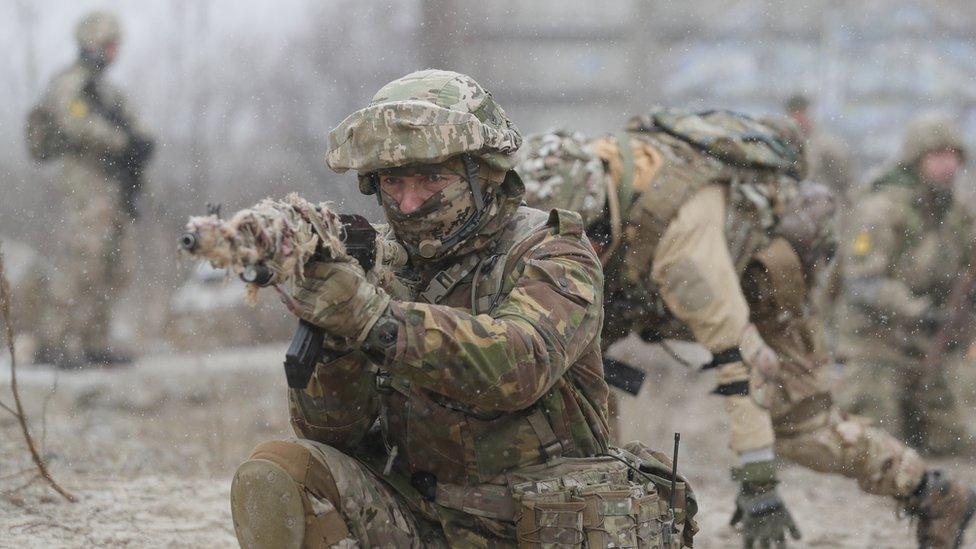
As Sky News reported on November 3, 2026, Western government officials have confirmed that British soldiers would be permitted to return fire during Russian attacks as part of a planned multinational mission in Ukraine. The force is to be jointly led by Britain and France and would be deployed to Ukraine following a potential ceasefire. This could create the first situation in which regular British and Russian forces engage in direct combat.
Military preparations are already well advanced. From November 9th to 22nd, around 2,800 military personnel from eleven countries will rehearse potential deployments during the Koalicja exercise in Poland. This includes 1,500 French and 300 British soldiers. Also participating are Germany, Belgium, Estonia, Lithuania, the Netherlands, Poland, Spain, Sweden, and Turkey. The exercise will focus on the deployment and supply of multinational forces, as well as joint military command. British Typhoon fighter jets and tanker aircraft are part of the scenario, as are Turkish naval units preparing for mine clearance operations in the Black Sea.
The planned force is called the Multinational Force Ukraine (MNF-U). It is the military arm of the “Coalition of the Willing” led by London and Paris. According to official statements, it will not operate as a NATO mission, nor will it undertake traditional peacekeeping operations. Instead, European soldiers will train the Ukrainian armed forces, restore their military capabilities, and support security in Ukrainian airspace and at sea. According to British government officials, the mission is intended to operate as independently as possible from American military technology.
Particularly explosive, however, is the explicit authorization to use military force. The declaration of intent signed by Great Britain, France, and Ukraine on January 6, 2026, already stipulated that the participating armed forces may use force, if necessary, to fulfil their tasks and to protect personnel, equipment, and infrastructure. This means that the planned mission is by no means limited to a purely symbolic presence.
Russia, for its part, has repeatedly stated that it would consider foreign forces on Ukrainian territory as military targets. Russian Foreign Ministry spokeswoman Maria Zakharova reiterated this position in July 2026. Moscow would view the deployment of Western troops as a foreign intervention and a threat to its security. Reuters reported this on July 15.
This is precisely where the dangerous contradiction in European planning lies. While London and Paris view their troops as a contribution to securing future peace, Moscow has already announced that it will not accept such a presence. Should a Russian attack occur after a deployment, British or French soldiers could return fire. A supposed security mission could thus quickly escalate into a direct military conflict between Russia and certain European NATO members. Such a clash would not automatically trigger Article 5, but it could generate significant political and military pressure for escalation.
British Defence Secretary Wes Streeting has made it clear that London is taking the preparations seriously. The planned force is not a theoretical consideration, but a real military formation intended to be ready after the end of hostilities. However, neither a ceasefire has yet been agreed upon nor an actual deployment decided upon. The prerequisites would be an end to hostilities and the corresponding political and military conditions.
Can a peace order function if one of the directly involved warring parties designates the intended foreign troops as military targets in advance?
Europe is preparing for a scenario whose prerequisites do not yet exist. While diplomatic solutions remain elusive, military structures, operational plans, and potential rules of engagement are already being developed. Governments speak of deterrence and long-term security. But the danger remains that the very troops meant to secure a future peace could trigger a new escalation between Russia and Europe.
yogaesoteric
November 12, 2026