
EU and US preparing for war
People keep asking when World War III will begin. They’re asking the wrong question. Europe is already acting as if it were at war. The politicians in Brussels would never allow peace because the sovereign debt crisis requires an external enemy. Every week, another European government announces increased military spending, another mobilization plan, another emergency measure, or another speech urging the public to prepare for conflict. This is no longer speculation. It’s politics.
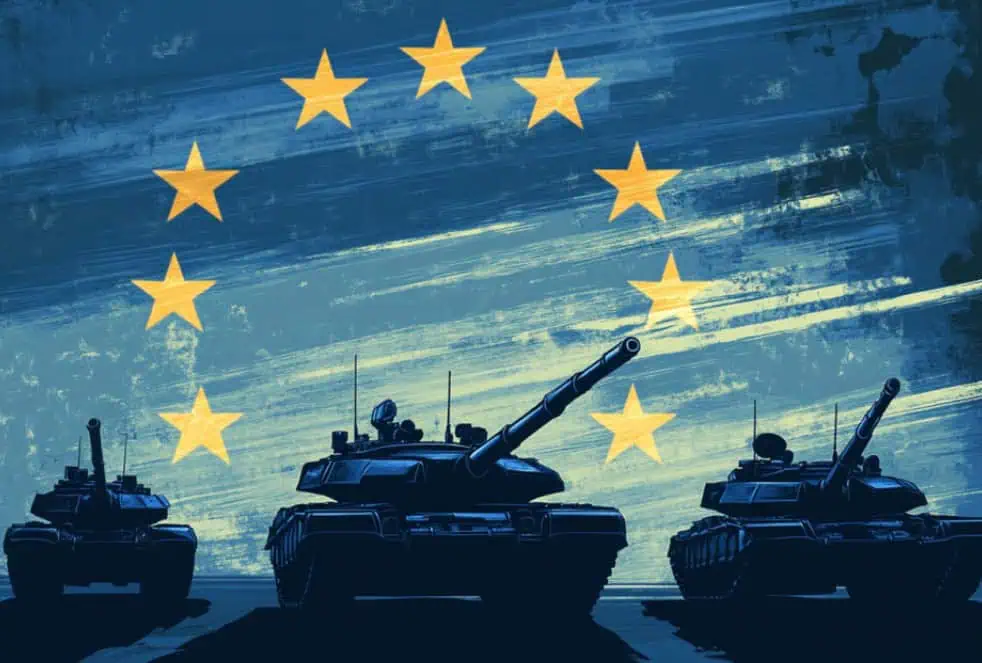
Now, Poland’s head of foreign intelligence, Colonel Paweł Szota, has made one of the clearest admissions to date. He warned: “The scale of Russian aggression is very high, and the risk of a military confrontation is real.” He added that Poland needs to “act as if war with Russia is inevitable,” because waiting until the conflict begins would be too late. These are extraordinary statements from the head of a NATO intelligence agency. Governments don’t speak in this way unless they are already planning the next phase.
Szota declared that Russia is “systematically shifting red lines and testing NATO’s reactions.” He further argued that the Kremlin views Poland and NATO’s eastern flank as “an obstacle to the realization of its imperial ambitions.” He also warned that Moscow could continue the war in Ukraine for years, sacrificing its own economy and expanding hybrid operations against NATO members, including provocations in the Baltic states. Europe is no longer talking about diplomacy. It is now openly discussing escalation scenarios and military contingency plans.
Governments always need a crisis when they cannot solve their debt problems. Europe is heading for an economic depression while military budgets explode. Germany is once again debating conscription. Poland is rapidly building one of the largest armies in Europe. NATO members are increasing their defence spending toward five percent of GDP. Civil defence campaigns are springing up across the continent. These are not the actions of governments expecting peace. They are the actions of governments preparing their populations, psychologically and financially, for war.
Once governments have convinced people that war is inevitable, they begin making decisions that make precisely that war inevitable. Every mobilization by one side is interpreted by the other as aggression. Every new package of sanctions provokes retaliation. Every troop deployment leads to another troop deployment in response. History shows that wars often become inevitable long before the first shot is fired because political leaders eliminate any possible avenue back to diplomacy.
Europe cannot simultaneously finance its welfare state, its green agenda, and an endless military buildup. Something has to give way. Throughout history, heavily indebted governments have repeatedly turned to external conflicts because wars postpone domestic reckoning. They provide a justification for deficits, emergency powers, censorship, and capital controls, while simultaneously diverting public anger toward an external adversary.
Ukraine has become the trigger, not the end goal. Europe is no longer preparing to prevent war. Its own intelligence chiefs are now publicly urging citizens to prepare for war because they increasingly expect it to occur.
Even the Washington Post is preparing for a major war
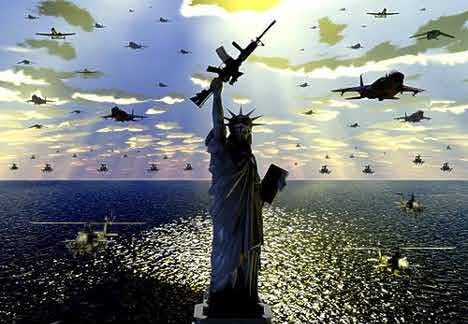
Just a few weeks ago, in the US there was talk of “targeted retaliatory strikes” or a “limited military action.” Now, even the Washington Post is striking a significantly different tone.
The newspaper openly states that the US and Iran are “moving step by step back toward a full-scale war.” Another headline claims that the US is “on the verge of returning to a full-scale war with Iran.”
This is remarkable. Because when a leading US media outlet starts talking about an “all-out war,” public perception modifies. What was previously portrayed as a limited conflict now appears as a potential area-wide war.
The newspaper itself provides the reason: Every new wave of attacks, every counterattack, and every soldier killed crosses further “red lines.” The ceasefire has effectively failed, the fighting is escalating, and a return to full-scale war appears increasingly likely.
In parallel, several major US media outlets are reporting daily new airstrikes, further US soldier casualties, and an expansion of hostilities to Jordan, Kuwait, Bahrain, and the Strait of Hormuz. Even within the US government, it is now openly acknowledged that the operation is developing into a protracted military conflict.
This development demonstrates one aspect above all: public discourse is modifying. Terms like “return to full-scale war” or “all-out war” are now appearing in major Western media outlets. Whether this reflects an actual military expectation, a journalistic assessment, or political preparation by the public cannot be determined from this alone. However, the possibility of a significantly larger war is now being openly discussed – and no longer relegated to the fringes of the debate.
yogaesoteric
July 20, 2026