
“Replacing Europe”: Undercover film traces the money behind Europe’s tax-funded mass migration
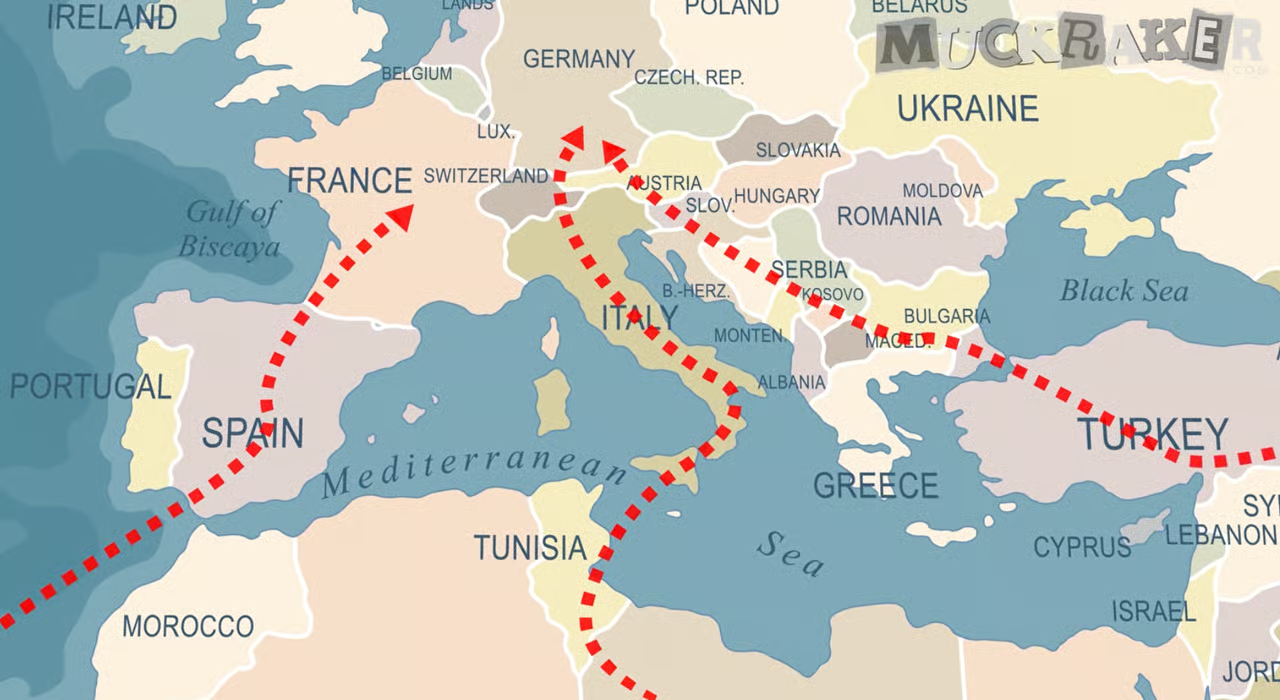
A new documentary by the investigative media outlet Muckraker traces the migration route from West Africa through Spain and France to Great Britain and examines what the outlet describes as a network maintained by tax-funded aid programs, NGOs and even Western governments.
The 47-minute film Replacing Europe is based on months of research and undercover footage to investigate the logistics and key NGO actors behind the nation-destroying mass migration to Europe.
“The entire migration process is a game,” says Sheikh M. Kromah, whom Muckraker identifies as an employee of the UN’s International Organization for Migration. He claims that Spain has a financial incentive to maintain arrivals because a reduction in arrivals could jeopardize EU funding.
Muckraker claims that publicly funded institutions help maintain the migration flows that European governments publicly promise to control. The interviews raise questions about oversight, spending incentives, and the line between humanitarian aid and facilitating illegal border crossings into Europe by foreigners.
The further concern is whether mass migration, malassimilation, and the exploding public costs of the European welfare state, which benefits migrants, could increase fiscal pressure and political instability.
Here is Muckraker‘s report:
A UN migration agency employee admits that Spain won’t stop the boats because the EU funds are too tempting. A Catholic NGO, which takes in €225 million annually, brings arrivals to the mainland and pays them to stay. Activists are marking a route to the French border. And the journalists who filmed this were attacked and nearly arrested.
The investigative media outlet Muckraker spent two months tracking the West African migration route from beginning to end: from the smuggling hub of Nouadhibou in Mauritania, through the Canary Islands of Spain and the Spanish and French mainland, to the English Channel and the United Kingdom. The result is a new documentary: Replacing Europe.
The film’s central insight is that the movement of tens of thousands of illegal immigrants to Europe is not chaotic. It is a controlled system operated by smugglers, publicly funded NGOs, activist networks, and governments, several of which admit on camera to profiting from it.
The findings of the documentary include:
- An employee of the UN’s International Organization for Migration says Spain is deliberately letting the boats continue so that it can continue to receive EU funds.
- ACCEM, a Catholic NGO that received around 225 million euros in 2024, mostly from the Spanish state, brings arrivals from the Canary Islands to the mainland, houses them in camps and pays them a monthly allowance.
- Hundreds of migrants are being flown from Gran Canaria to Madrid.
- In the Spanish border town of Irun, a group of activists has painted a trail of footprints that leads migrants past the police to France, where a city-run shelter accommodates people without papers.
- The UN’s own migration agency says the priority should be to “facilitate, not restrict” migration.
Where it begins: Mauritania
Most boats on the West African route depart from Senegal, Morocco, Western Sahara, and especially Mauritania. Tens of thousands of the illegal immigrants who landed in the Canary Islands set sail from the coast of Mauritania.
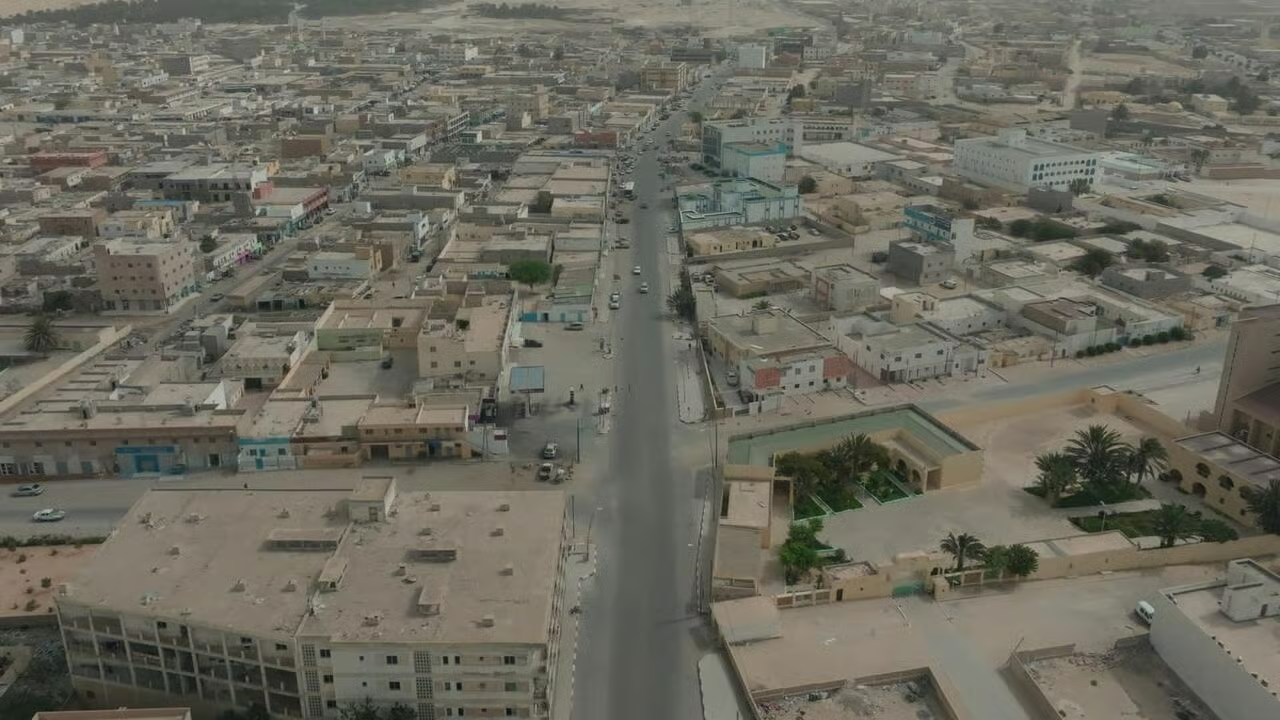
In Nouadhibou, a local source told Muckraker that young female migrants were being raped and held “like slaves,” and that their captors were calling their families to demand ransom. When asked whether criminals or the police were responsible, he replied “both”: “The police do it……. because they work with the criminals who smuggle people.” He added that arms and drug traffickers were traveling among the migrants to reach Europe.
Muckraker also visited a migrant support center in Nouadhibou, run by OAMR (Organisation d’Appui et d’Assistance aux Migrants et Réfugiés), which collaborates with the United Nations International Organization for Migration. A banner on the wall reads “Projet Julia Taft – Phase II”: a capacity-building project offering training, outreach, and support for refugees, asylum seekers, and migrants in Nouadhibou. The U.S. Embassy in Mauritania is listed as a funder. When asked if the United States also pays for the centre’s bakery and computer lab, the staff answered yes.
The Julia Taft Refugee Fund is a State Department program administered by the Bureau of Population, Refugees, and Migration. Established in 2000 and named after Julia Taft, who headed the Bureau under President Clinton, it allows U.S. embassies to provide grants directly to small, local NGOs. The 2022 call for proposals from the U.S. Embassy in Nouakchott offered up to $50,000 per project and listed migrants, along with refugees and returnees, as potential beneficiaries.
Arrival: The Canary Islands
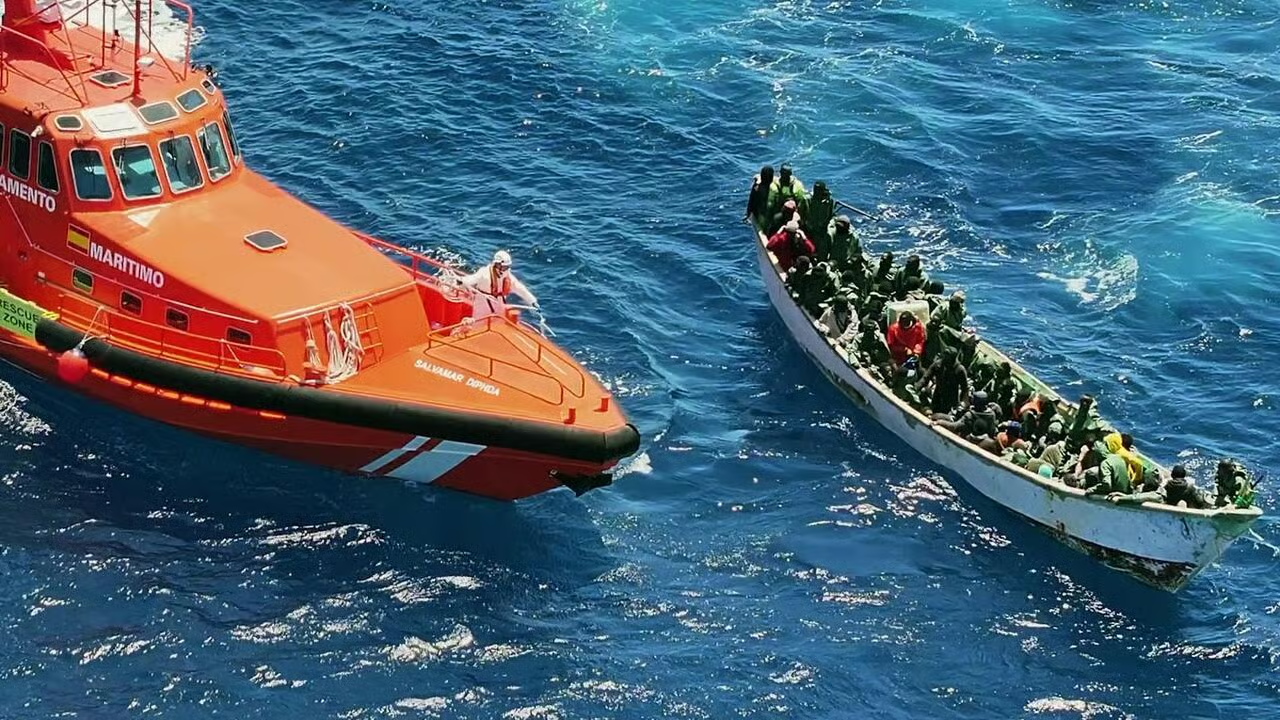
Off the coast of El Hierro, Muckraker filmed a boat packed with migrants, almost all of whom were men of military age. It had been towed in by the Spanish sea rescue service. One man was being carried off on a stretcher, apparently lifeless.
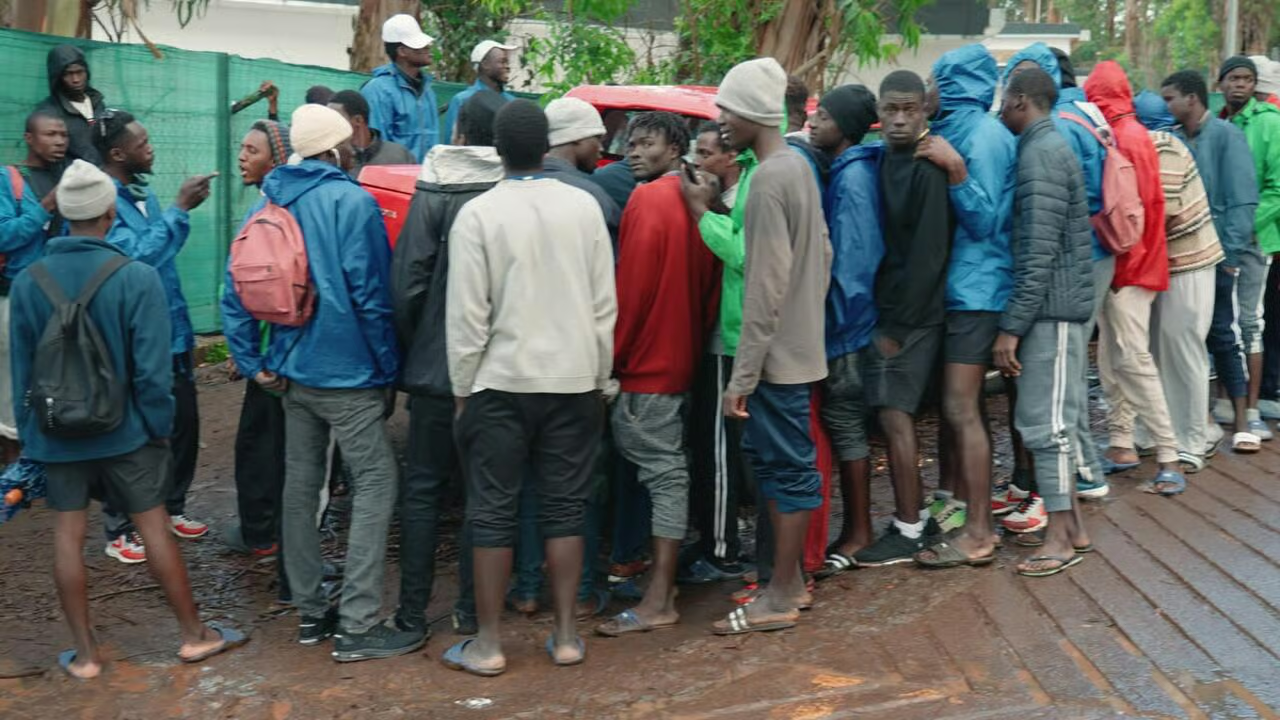
The arrivals are taken to makeshift camps. Residents reported days without work (“just eating and sleeping”) and men going out to drink and trying to return with knives. A migrant from Senegal described an even grim practice during the crossing itself: passengers accused of witchcraft are bound and thrown into the sea.
The UN insider: “Migration is a game”
In the Canary Islands, Muckraker met Sheikh M. Kromah, who at the time worked for the UN’s International Organization for Migration (IOM) and has over a decade of experience in migrant aid. Kromah was photographed on El Hierro with Spain’s Minister for Inclusion, Social Security and Migration, Elma Saiz, and local government officials.
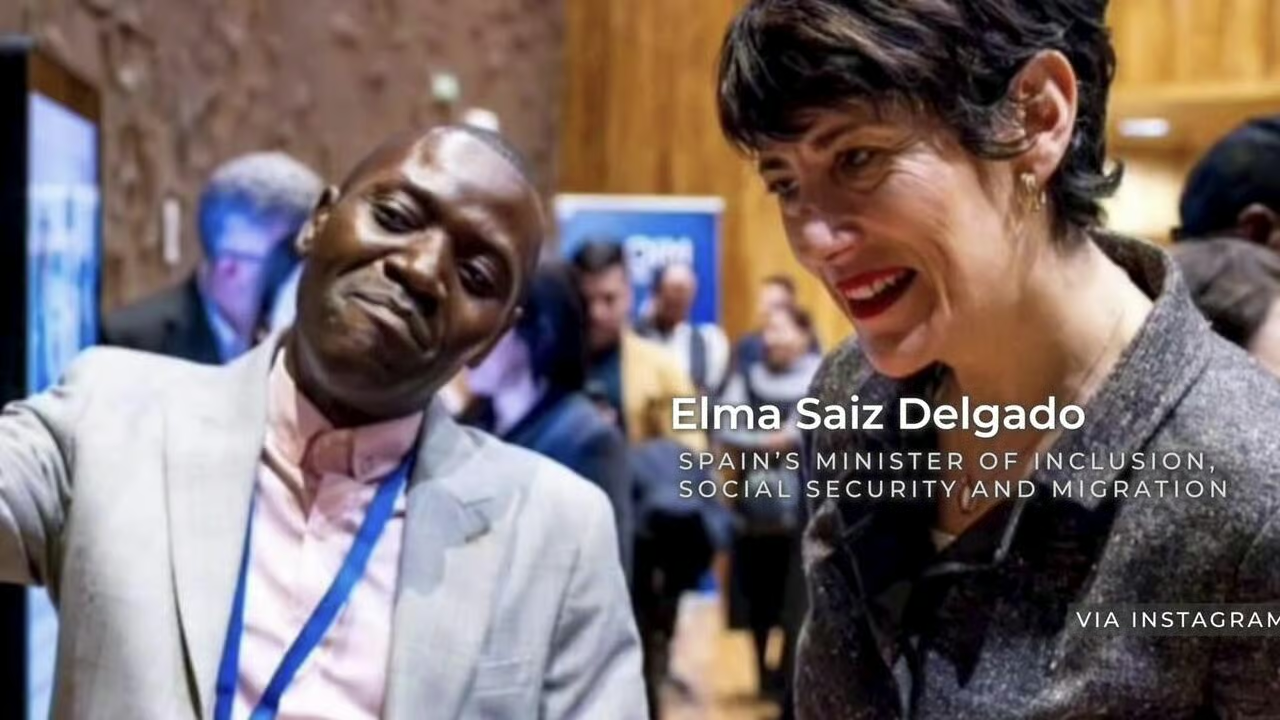
“The whole migration process is a game,” Kromah told Muckraker. “Everyone wants their share.” He said smuggling networks were charging between €50,000 and €60,000 per boat.
When asked why Spain wasn’t stopping the arrivals, he said the government didn’t want to. Spain receives a huge sum of money from the European Union every year to manage migration, he said, and if the boats stopped coming, the money would dry up. According to him, the strategy was “to minimize the scale, but not stop it completely, so they can continue to get the money.”
Kromah went even further, claiming that some of the money was handed over in cash and brought into negotiation rooms in suitcases. He said that even the special police officers deployed on the islands, who received about three times the salary of a regular officer, “want the boats to come every day.”
“Everyone here just wants to make money off everyone else,” he said. “So, when you look at it closely, it’s a game.”
Flew to the mainland
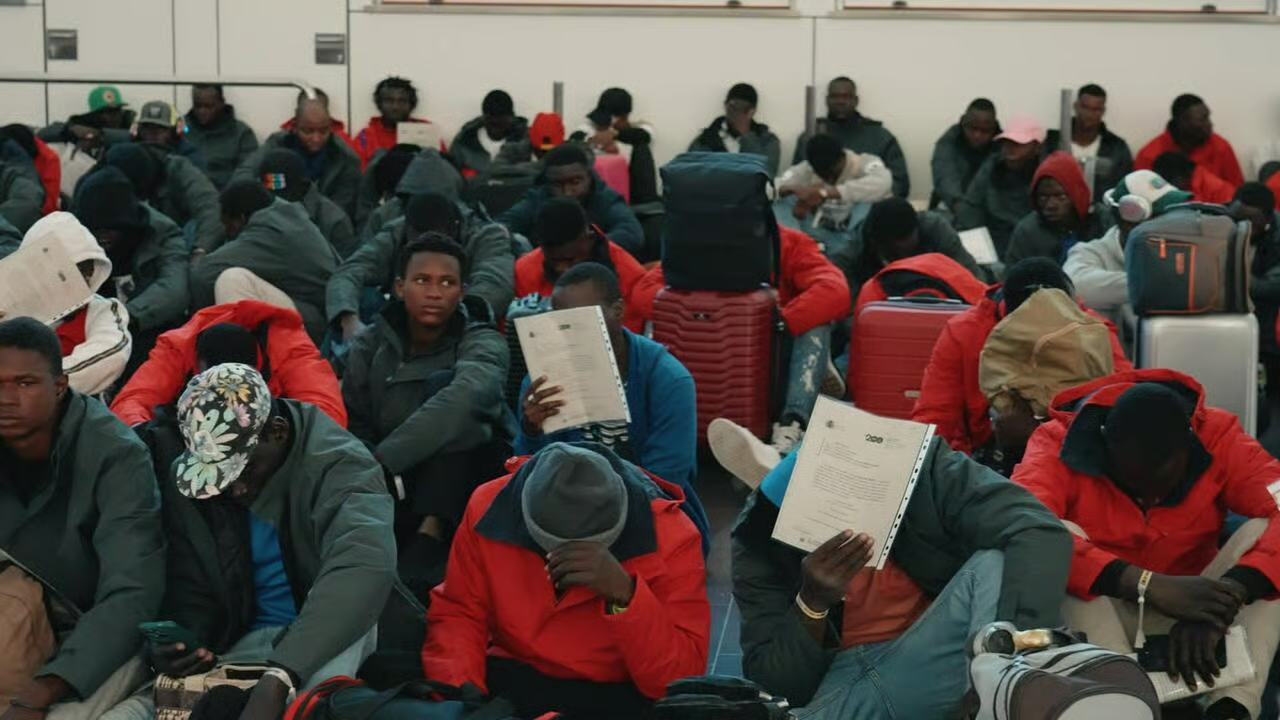
Then comes the transfer. At Gran Canaria airport, Muckraker found several hundred African men waiting to be flown to Madrid. This process takes place several times a week and is organized by ACCEM.
ACCEM: The NGO that runs Spain’s migrant camps
One of the main organizations responsible for bringing illegal immigrants from the Canary Islands to the Spanish mainland and housing them in camps upon arrival is ACCEM.
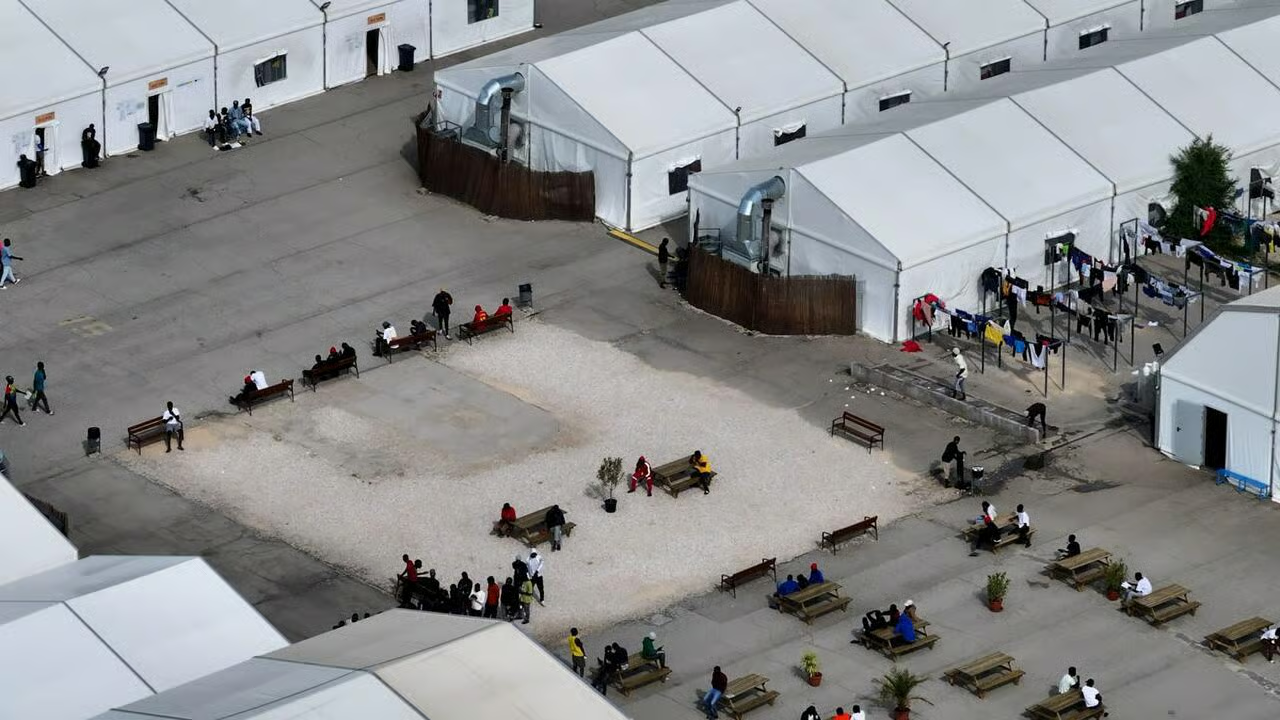
ACCEM’s full name is Asociación Comisión Católica Española de Migración, the Spanish Catholic Commission for Migration. According to its own 2024 annual report, as reported by the Spanish media outlet Infovaticana, ACCEM took in approximately €225 million in 2024, 88% of which came from the Spanish central government. That year, it employed 3,839 people and managed 9,812 accommodation places.
ACCEM makes no secret of its goals. In 2023, its president, Pilar Samanes Ara, co-signed a letter calling for more “safe and legal pathways” for migrants to the European Union and Spain. The letter directly linked this demand to the UN Agenda 2030 and described migration as a “transformative force for growth and development.”
Outside an ACCEM camp, Muckraker met a man from Senegal who had lived there for almost a year without work. He said the residents received around 75 euros a month from ACCEM, as well as bus or metro tickets. Even those who left the camp without papers continued to receive the money and a ticket, he said. He knew a friend who had moved to another Spanish city and continued to receive payments.
The UN plan
What Kromah described is consistent with the framework published by the UN itself. In September 2015, the UN General Assembly adopted the Agenda 2030 for Sustainable Development, which is based on 17 Sustainable Development Goals.
In a thematically related paper entitled “Migration and the Agenda 2030,” the IOM states that the Agenda recognizes migration as a “central development issue” – for the first time, migration has been explicitly included in the global development agenda. The paper describes migrants and children as “agents of development” and explains that migration can be linked to any of the goals of the Agenda 2030. The conclusion: Efforts should not focus on stopping migration. Facilitating it, rather than restricting it, should be the priority.
It is the same framework that ACCEM’s president invoked when she called for new pathways to Europe. The UN sets the agenda, NGOs like ACCEM implement it, and European taxpayers fund it.
A painted trail to France
In Irun, the last Spanish town before France, migrants arrive daily at the bus station. From the bus station, a trail of painted footprints leads to the Red Cross and on to the town hall, where an activist group called Irungo Harrera Sarea meets with migrants daily. Members of the activist group told Muckraker that the group has helped around 40,000 migrants cross the Spanish border into France.
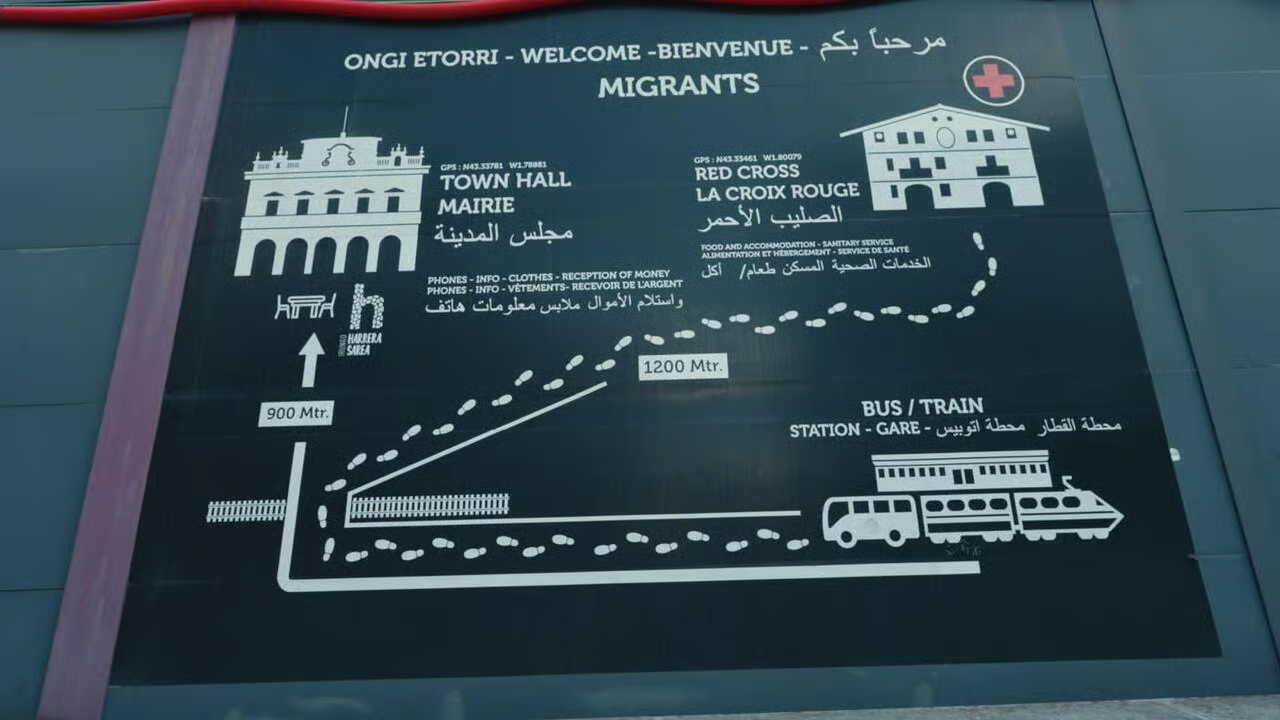
The man who painted the footprints told Muckraker the trail was intended to allow migrants to cross the border without being caught by the police; he planned to paint more “because they get lost.” Activists confirmed they tell migrants which buses to take to avoid being caught. A billboard near the train station shows the entire route.
The trail leads to Pausa, a shelter in Bayonne, France, which has received millions of euros in public funding. Its director told Muckraker that the centre is run by the Bayonne city council and takes “no photos, no names.” Migrants stay for a few days, he said, then board a bus and “travel all over Europe” – with or without papers.
Attacked in Paris
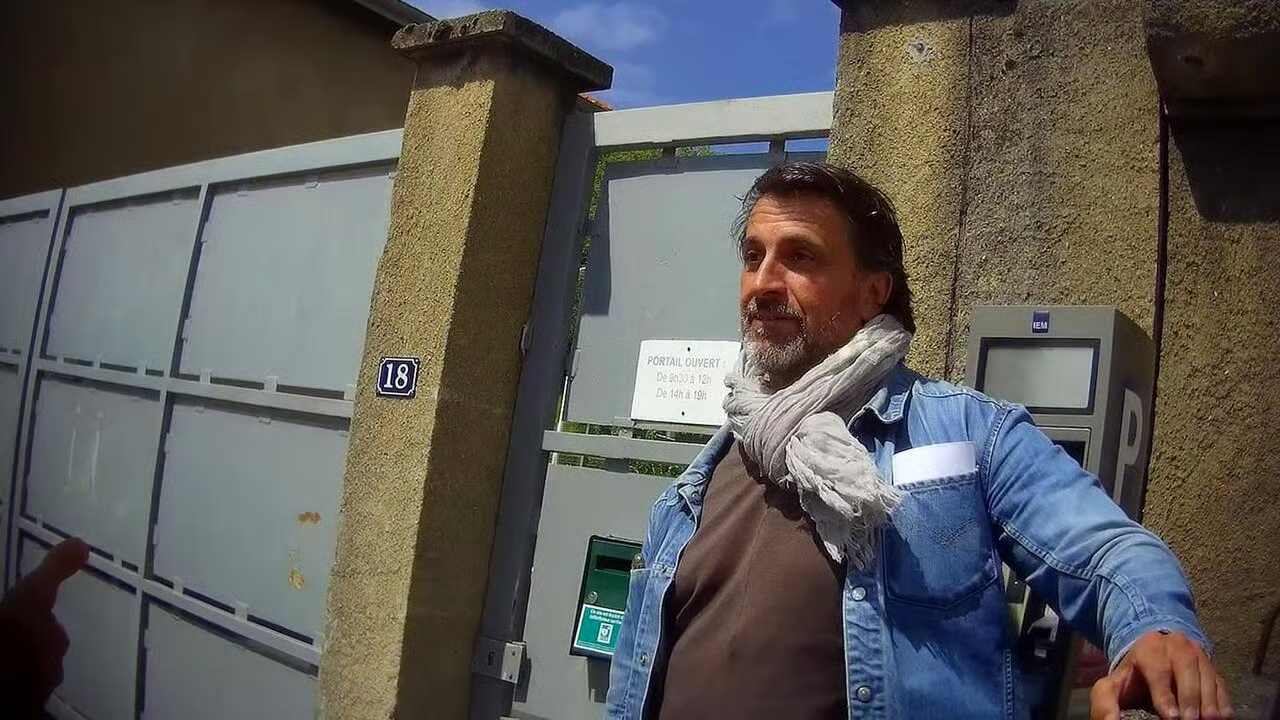
At the entrance to the Eiffel Tower, Muckraker found the square packed with migrant street vendors. When the team started filming, the vendors surrounded them. Josh Rubin, co-founder of Muckraker, was attacked and suffered severe head bleeding while adjusting a camera.

A few kilometres away, Muckraker visited ARDHIS, an NGO that helps migrants apply for asylum as LGBT refugees. One migrant familiar with the community said that many of those claiming asylum were not gay: “They say they just want to get their hands on the help…….”
Calais and the English Channel
For those seeking to reach Britain, Calais is the last stop in France, where makeshift camps serve as starting points for crossing the English Channel. A local private security guard described how migrants steal from shops and kill a farmer’s goat to eat. Human traffickers mingle with the residents of these camps, which have seen deadly shootings in recent years.
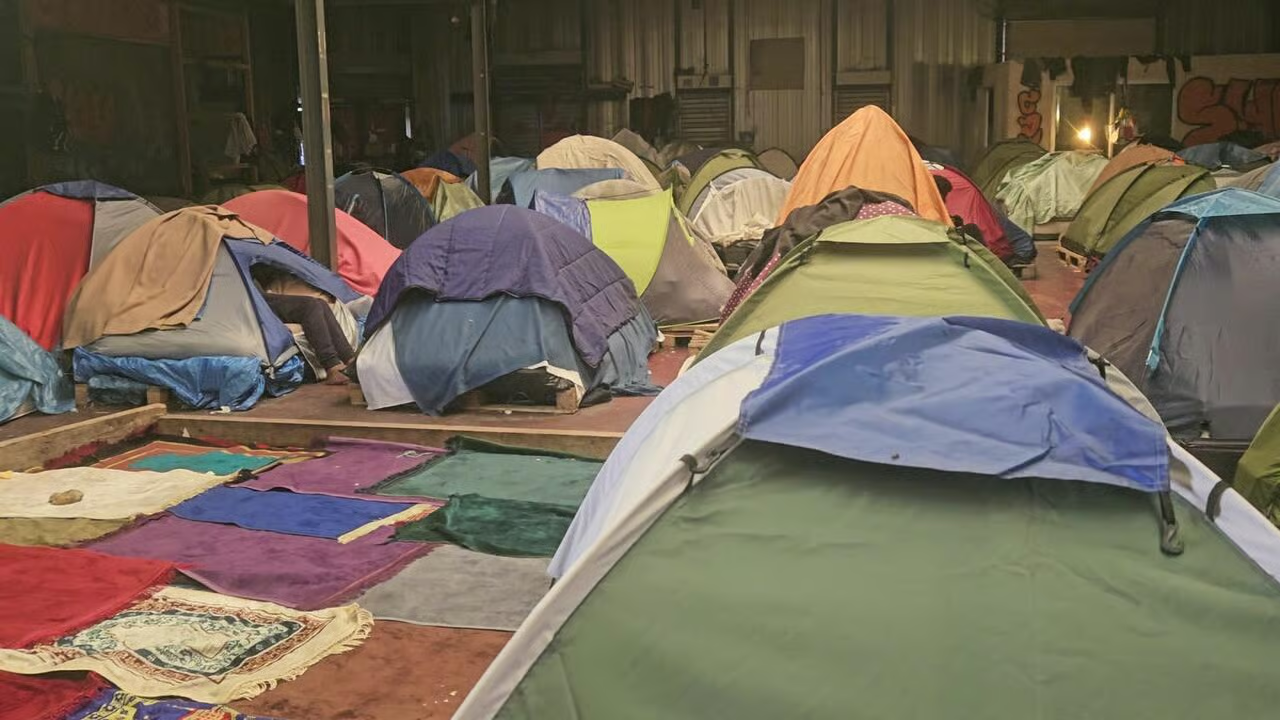
Muckraker posed as a volunteer and filmed with hidden cameras. This allowed the team to gain access to a camp in an abandoned warehouse. The men there said they were from Sudan, Morocco, and Egypt. The team counted approximately 100 tents under one roof, a carpeted prayer area with stacks of Quran-s, and masked men watching the visitors. When the camera was noticed, the atmosphere changed. “I don’t accept you taking pictures here,” one man said. A crowd moved closer and pushed the team out.
International smuggling networks organize the crossings themselves. Many of the smugglers are themselves illegal migrants, often from Iraq, Albania, and Kurdish regions. On the evening before departure, hundreds of migrants leave the camps and head to pre-arranged meeting points along the coast. Muckraker spent weeks in Calais, observing these movements and gathering information.
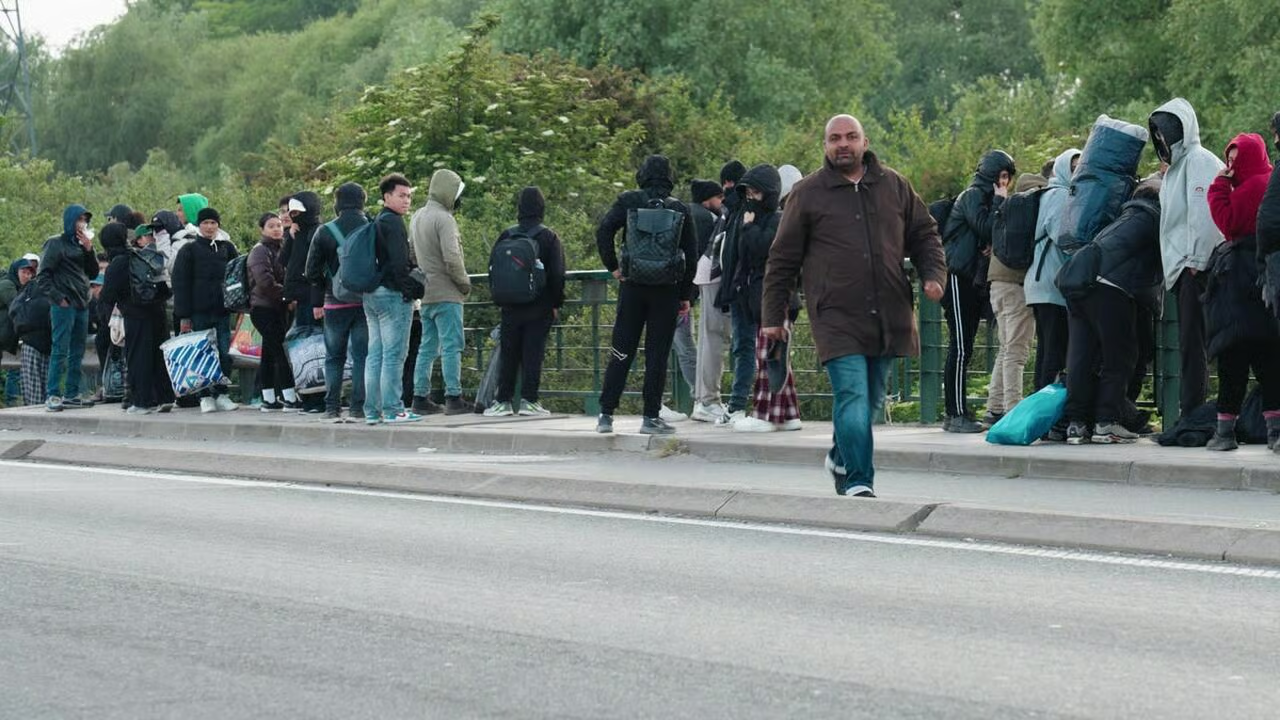
The difficult part was getting to a departure point. An Afghan migrant, who was planning the crossing himself, told the team that the smugglers distrusted anyone who spoke English or French, assuming they were spies or police officers. He warned that they could be beaten, injured, or even killed. One night, he sent the team the location from which a boat was supposed to leave, followed by a warning to be careful because the smugglers were armed.
The team drove to the coast and waited. In the darkness, they watched as an inflatable boat headed out into the open water, while groups of men, whom they suspected might be smugglers, moved along the shore. The boat was supposed to turn around and pick up its passengers on the beach.
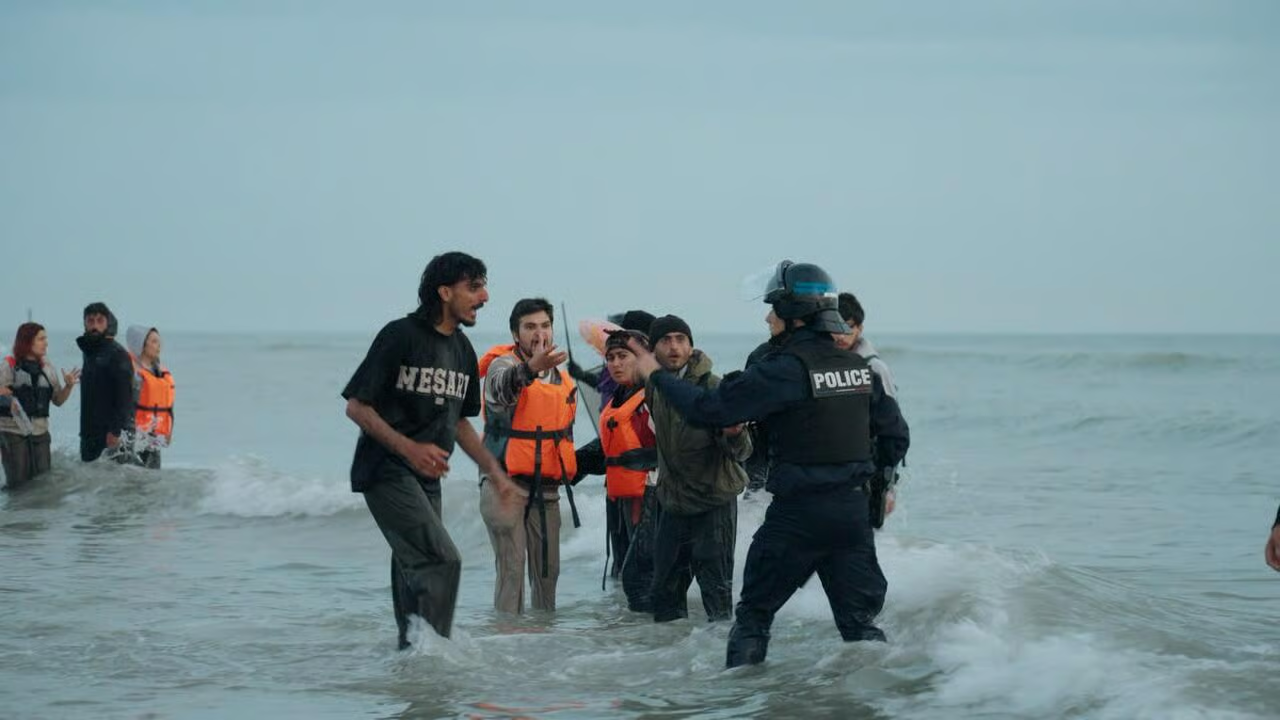
Around 5 a.m., more than 50 people ran from the dunes toward the water, including a man carrying a toddler. For more than 15 minutes, there wasn’t a single police officer on the beach. When the police arrived, the boat was being loaded. The officers soon gave up and walked back up the beach. The boat they had tried to stop successfully departed and later reached Great Britain.
The United Kingdom
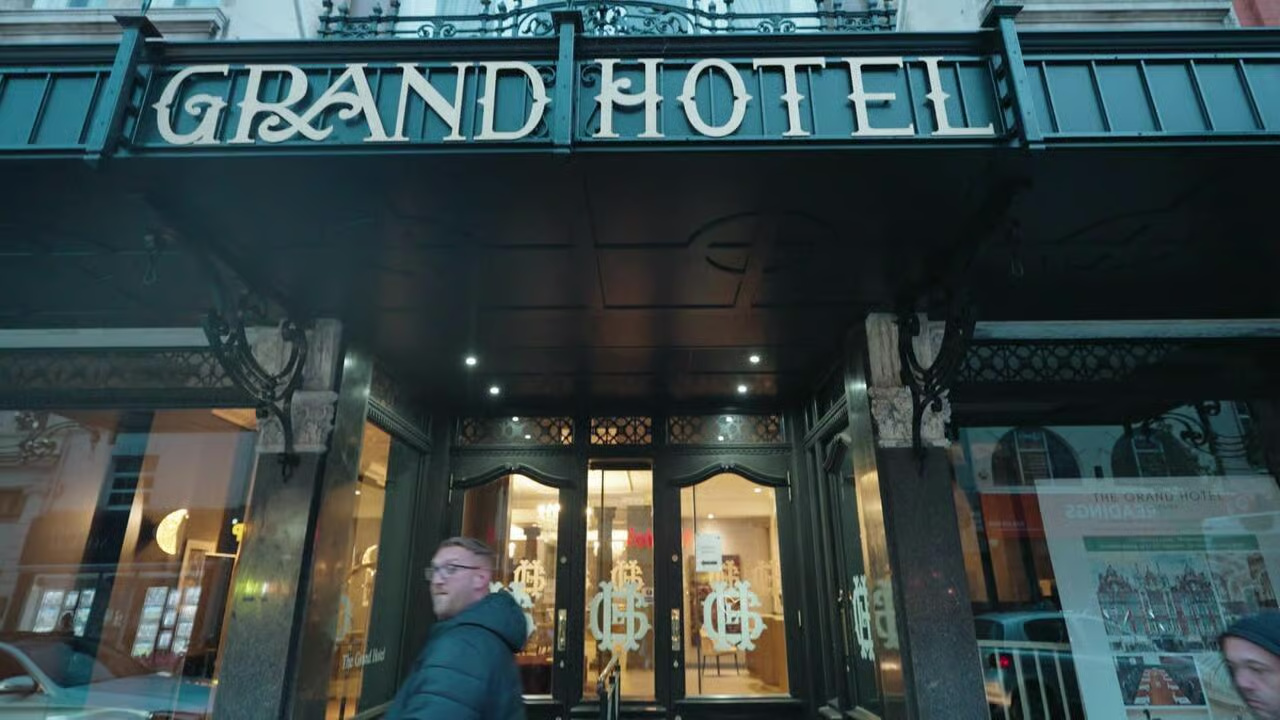
In England, asylum seekers living in a state-funded hotel told Muckraker that room and board were free, they received about £300 a month, and their university studies were also free. One said he had been living in the hotel for three years.
Watch the full video here:
yogaesoteric
October 30, 2026
Also available in:
 Română