
The silent saboteur: How your chair undermines your health
In an era where fitness trackers count steps and gym memberships are a badge of honour, a stealthy health threat persists: the chair. For the millions of office workers, commuters and homebodies who spend most of their waking hours seated, a growing body of research delivers an unsettling message. Meeting recommended physical activity guidelines with regular exercise does not fully counteract the physiological damage inflicted by prolonged sitting.
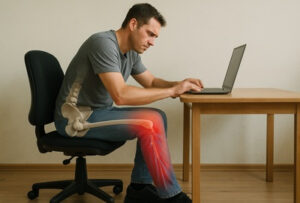
This revelation, emerging from contemporary studies, challenges the conventional common knowledge and underscores a critical gap in modern wellness strategies. The “why” this matters is rooted in the very design of the human body, which thrives on movement, not stillness. The “who” is virtually anyone in a technology-driven, sedentary society. The “when” is now, as cumulative daily inactivity compounds over years. The “where” is everywhere we sit – offices, cars and living rooms. And “what occurred” is science identified a paradox: you can be both active and at risk.
A historical precedent of stillness
The understanding that inactivity is harmful is not new. Historical context for this modern crisis can be traced to the 1950s, when a landmark study of London’s double-decker bus drivers and conductors revealed a stark contrast. Drivers, who sat for nearly their entire shift, suffered heart attacks at twice the rate of the conductors, who constantly climbed stairs. This early observation pointed to a direct link between sedentary work and cardiovascular disease. Later, research on astronauts in the 1970s showed how a zero-gravity environment – the ultimate form of reduced physical demand – led to rapid muscle atrophy and bone loss. These cases provided early clues that the human body deteriorates without the regular gravitational resistance and muscular engagement that movement provides, a principle that applies directly to the earthbound habit of excessive sitting.
The proprioception problem
Beyond the well-documented metabolic risks like impaired blood sugar regulation and increased blood pressure, prolonged sitting attacks a fundamental bodily system: proprioception. This is the body’s internal GPS, a network of sensors in muscles, joints and tendons that provides constant feedback about position and movement without relying on sight. It enables balance, coordination and fluid motion. Research indicates that extended periods of sitting create a form of sensory deprivation for this system. The feedback loop weakens, leading to measurable declines in postural control and core stability. A 2025 study in the journal Applied Sciences found that the interplay between physical activity and sedentary behaviour directly influenced balance and gait in young, healthy adults, proving the impact begins early.
The exercise paradox
This leads to a counterintuitive modern dilemma known as the “physical activity paradox.” A person can diligently engage in leisure-time physical activity – the recommended 150 minutes of moderate to vigorous exercise per week, such as brisk walking in a park – yet still suffer the harmful consequences of prolonged occupational sitting. The concentrated dose of movement from a workout, while valuable for cardiovascular health and strength, cannot fully reset a system starved of varied, frequent input throughout the day. The proprioceptive system needs consistent stimulation, akin to sipping water regularly rather than drinking a day’s worth in one gulp.
Practical strategies for a mobile life
The solution is not to abandon movement, but to augment it with a new priority: interrupting sedentary time. The goal is to weave frequent, low-intensity movement into the fabric of the day. Effective, evidence-based strategies include:
- Setting a timer to prompt a brief break every 30 to 60 minutes to stand, stretch, or walk.
- Using a sit-stand desk or sitting on a stability ball to engage postural muscles.
- Incorporating “movement snacks” like bodyweight squats, heel raises, or single-leg stands during routine tasks.
- Seeking variety by taking stairs, walking on uneven terrain, or parking farther away.
- Choosing movement that challenge spatial awareness, such as dancing, hatha yoga, or walking in a forest.
The emphasis is on frequency and variety over intensity. Studies on sit-stand workstations show they can reduce sedentary time by over an hour daily, providing critical proprioceptive feedback.
Investing in longevity now
The imperative to move more throughout the day transcends immediate comfort. Balance and coordination are foundational longevity skills. Poor proprioception is a leading predictor of fall risk in older adults, and falls are a primary cause of injury and loss of independence. Furthermore, the brain regions involved in spatial awareness overlap with those governing cognitive functions like memory and decision-making. Challenging balance, therefore, also challenges and supports the brain. Building this resilience is a compounding investment; small, consistent actions taken today safeguard mobility, confidence and cognitive health for decades to come.
A new movement mandate
The cultural focus needs to switch from structured exercise to encompass the critical importance of non-exercise activity. Combating the dangers of prolonged sitting requires a conscious dismantling of sedentary defaults in work, travel and leisure. By reimagining the day as a series of movement opportunities, people can protect their metabolic health, sharpen their body’s innate spatial intelligence and build a robust foundation for aging. In the end, the prescription is simple but profound: sit less, move more and vary your position often.
yogaesoteric
April 27, 2026