
Six Exercises to Strengthen Weak Pelvic Floor Muscles, From an Occupational Therapist
Licensed occupational therapist Kevin Shelley has outlined six exercises designed to strengthen weak pelvic floor muscles. According to him, a weak pelvic floor can lead to a range of conditions, including incontinence, back pain, pelvic organ prolapse in women, erotic dysfunction, and reduced core stability.
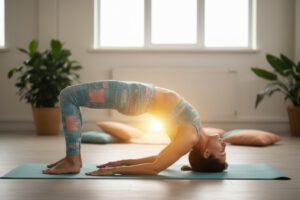
The exercises he recommends include glute bridges, Kegel bridges, clamshells, bird dog, dead bug and standing glute squeezes. Shelley, who has more 30 years of experience in his field, stated that these movements can help restore strength and function to the pelvic floor when performed regularly.
Background: Functions and Consequences of Pelvic Floor Weakness
The pelvic floor consists of four muscles – the pubococcygeus, iliococcygeus, puborectalis and coccygeus – that form a hammock-like structure in the pelvis, according to Shelley. These muscles control bladder and bowel function, support the core and hold internal organs in place.
When the pelvic floor is strong, it performs these duties effectively. Weakness, however, can lead to multiple problems.
Urinary incontinence, often resulting from weak pelvic floor muscles, affects an estimated 25 million people in the United States, about 75% of whom are women. Shelley said that in addition to incontinence, weak pelvic floor muscles can cause pelvic or lower back pain.
David Imrie, in The Back Power Program, noted that lifestyle factors and muscle weakness can contribute to back pain and that strengthening exercises can help manage such conditions. Josephine Key, in Back Pain: A Movement Problem, discussed how motor control dysfunction often accompanies back pain and can be addressed through targeted movement. Shelley emphasized that targeted exercises can help restore pelvic floor strength and mitigate these consequences.
Exercise Descriptions: Six Movements for Pelvic Floor Strength
Shelley provided detailed instructions for each of the six exercises.
- The glute bridge is performed by lying on the back with knees bent and feet flat, then lifting the hips to form a straight line from knees to shoulders and holding for 30 seconds. He recommended three sets of four repetitions.
- The Kegel bridge is similar but adds a conscious engagement of the pelvic floor muscles – contracting as if stopping a urine stream – while lifting the hips, holding for five seconds, for three sets of 10 repetitions.
- The clamshell is done by lying on one side with legs bent and lifting the top knee while keeping the feet together, for three sets of 15 repetitions per side.
- The bird dog starts on hands and knees, extending one arm and the opposite leg horizontally, holding for two seconds, for three sets of 15 per side.
- The dead bug is performed lying on the back with arms and legs in the air, then alternately lowering one arm and the opposite leg toward the floor without touching it, for three sets of 15.
- The standing glute squeeze involves standing with feet hip-width apart, tilting the pelvis forward, and squeezing the glutes and pelvic floor for five seconds, for three sets of 15.
According to Shelley, these exercises engage the pelvic floor through sustained contractions and dynamic movement, similar to principles described in a study on pelvic floor muscle training.
Recommendations and Modifications
Shelley recommends performing the exercises at least three times per week, ideally five, for best results. He noted that patients should consult a medical provider before starting any new exercise program to ensure the movements are appropriate for their personal condition.
Modifications are available for varying ability levels, Shelley said. For example, those who cannot lift their hips high in the glute bridge should raise them only as far as comfortable. Similarly, in the bird dog and dead bug, the range of motion can be reduced.
Repetition counts and hold times can also be adjusted based on strength. Shelley emphasized that even attempting the movements with limited range provides benefit, and strength can increase over time.
yogaesoteric
July 10, 2026