
How a small mountain militia created a global bottleneck in shipping
The Houthis, who originate from the northern highlands of Yemen, now hold positions on the Red Sea coast and on Perim Island. Their territorial gains, missile capabilities, and threats against Saudi ships are escalating the situation at the Bab el-Mandeb Strait.
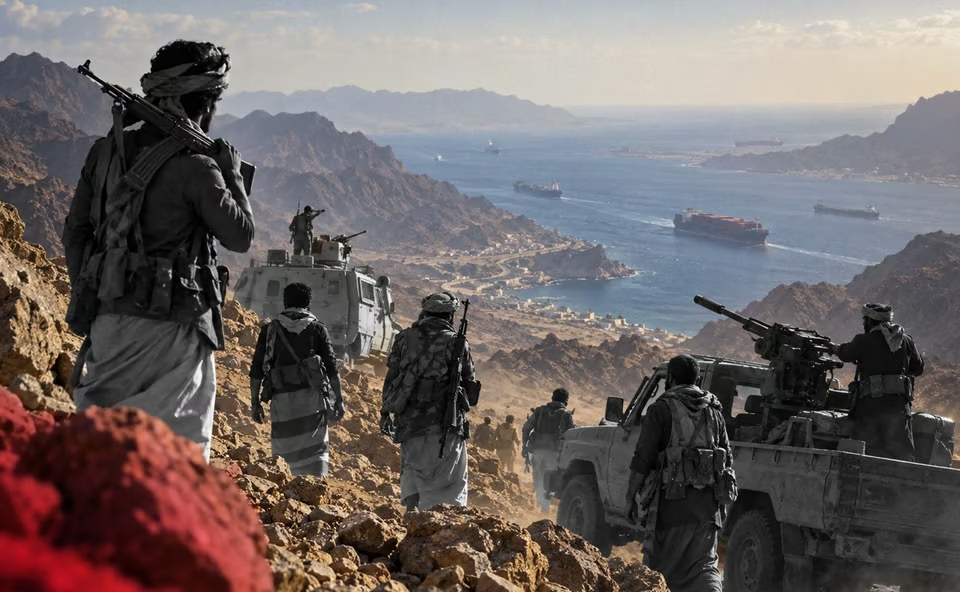
The Houthis began as a rebel movement in the mountains of northern Yemen. They now hold positions in Bab el-Mandeb, the strait through which ships travel between the Red Sea and the Indian Ocean.
Their advance along the west coast of Yemen has brought their ground troops closer to a route they could already threaten with missiles and drones.
While this does not give the group control over every ship passing through the waterway, it does provide them with a new position from which to exert pressure.
From Saada to the coast
The movement originated in northern Yemen under the leadership of Hussein Badreddin al-Houthi.
Originally known as the Believing Youth, it initially mobilized due to religious and political grievances before more comprehensively opposing the government of President Ali Abdullah Saleh.
Their slogans included the words “Death to America, death to Israel,” reflecting the confrontational ideology that characterized their early years.
A series of wars in Saada between 2004 and 2010 provided experience for its fighters and contributed to the organization’s continued existence.
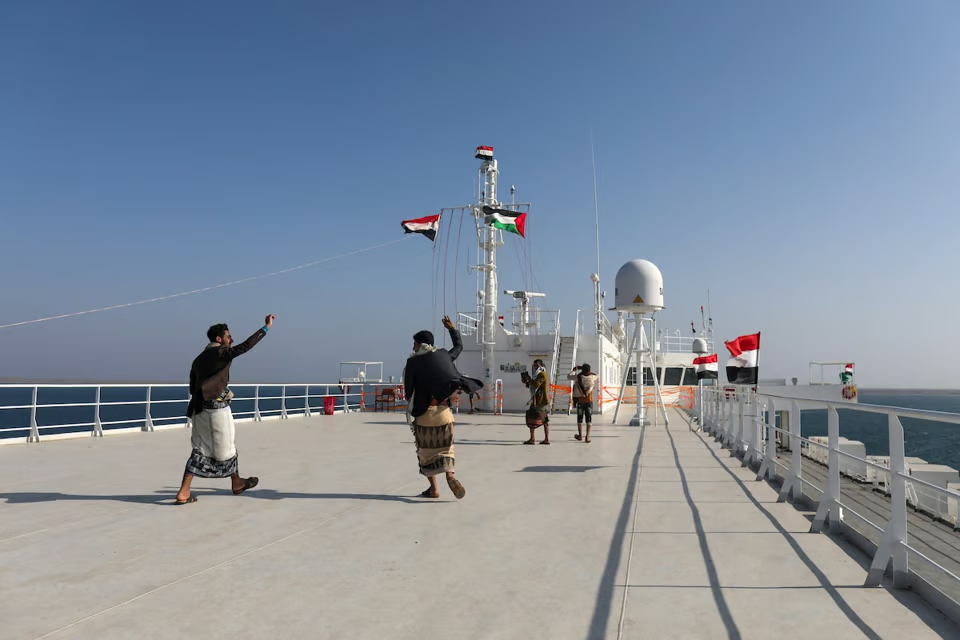
As the central government of Yemen lost influence in 2011, the Houthis gained ground. With the capture of Sana’a in 2014, they turned from a rebel movement in the north into a force at the heart of the war in the country.
They later used rockets and drones to extend their sphere of influence beyond the territory they controlled.
Following the outbreak of war between Israel and Hamas in October 2023, the group began attacking merchant ships that they believed had links to Israel.
Their campaign subsequently expanded to include ships with links to the US and other vessels, prompting the US and Great Britain to attack Houthis infrastructure.
A new position on the strait
The latest coastal offensive began in August with missile and drone attacks on pro-government positions. Ground operations followed in early September.
Mocha fell on September 10th. The following day, Houthi forces reached the island of Perim, located within the Bab el-Mandeb strait. They also captured parts of the Hanish archipelago further north.
The withdrawal of pro-government troops enabled the Houthis to advance rapidly along certain stretches of coastline.
The Presidential Council of Yemen described the losses as temporary while its troops regroup around Taiz and on the west coast.
Mocha lies approximately 50 kilometres north of Bab el-Mandeb. Together, the coastal positions and the island of Perim provide the Houthis with a broader base near the entrances to the strait.
Weapons and support from outside
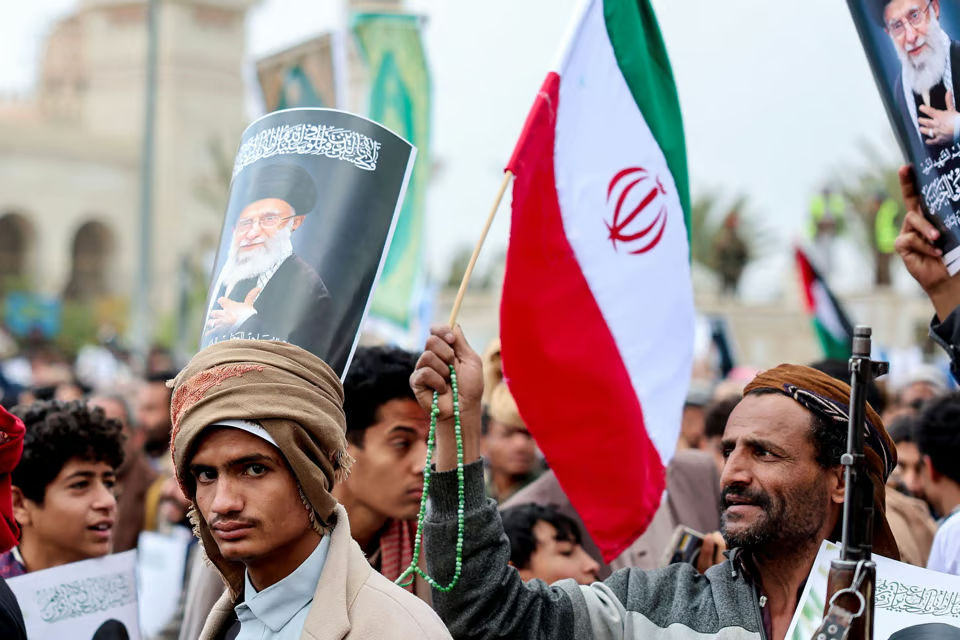
The movement has its roots in Yemen, but its military expansion has been accompanied by Iranian support.
A 2025 UN Security Council report described how increasingly sophisticated weapons were reaching the Houthis.
During a seizure of more than 750 tons of military equipment in June of the same year, missiles, warheads, drone engines, radar equipment and air defence systems were among the items confiscated.
According to the report, some systems exhibited features associated with weapons manufactured in Iran, but it also highlighted the Houthis’ ability to assemble and manufacture weapons domestically.
Reuters reported in July, citing four sources, that Iran flew Islamic Revolutionary Guard commanders, advisors, and missile and drone equipment from Tehran to Yemen on July 13.
If this is the case, this transfer would indicate that the support extends beyond pure hardware to include technical expertise.
The group’s current position combines these capabilities with greater range and access to areas near the sea route.
Houthis told US officials in an Oman meeting that they won’t attack American vessels, Israeli ships, or commercial vessels — only Saudi ones.
This is a notable shift.
Since after the May 2025 ceasefire the Houthis explicitly excluded Israel and kept targeting Israeli-linked shipping.
The meeting included sanctioned Houthi official Mohammad Abdulsalam and Abdelmalik al-Ajri.
Source: Reuters
— Clash Report (@clashreport) September 16, 2026
Saudi ships in focus
The Houthis have identified Saudi ships as potential targets, even though they had assured US representatives during talks in Oman that they would refrain from attacking American, Israeli and other merchant ships.
These statements describe the group’s stated intentions, but do not guarantee a safe passage.
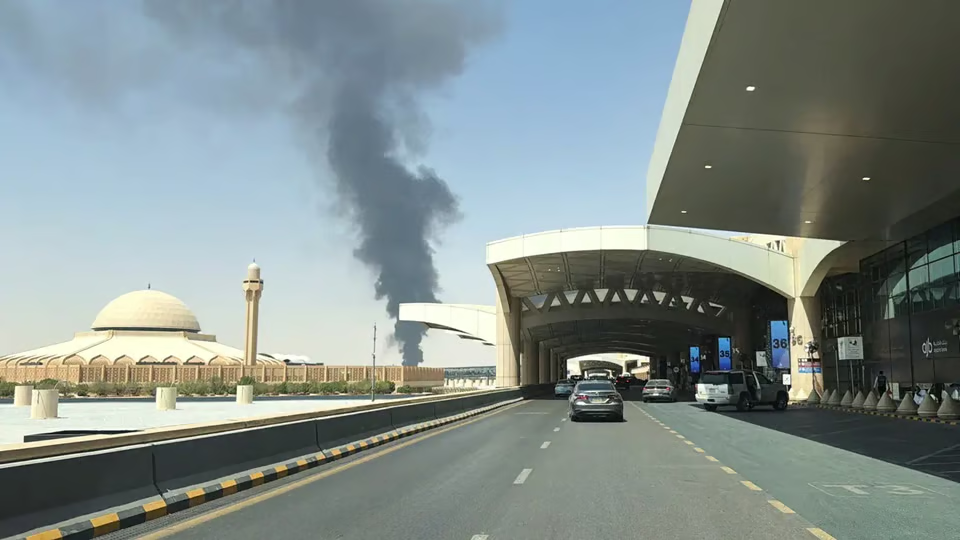
The group has also claimed responsibility for attacks on Saudi targets. On September 19, it stated that it had attacked “sensitive” targets in Riyadh; Saudi Arabia stated that its air defences had intercepted a ballistic missile heading towards the capital.
Other claims by the Houthis regarding Yanbu and Saudi targets could not all be independently verified.
Saudi Arabia’s East-West pipeline transports crude oil to Yanbu on the Red Sea, allowing some exports to bypass the Strait of Hormuz.
This makes threats to Saudi Arabian-related shipping in the southern Red Sea particularly serious when traffic through the Strait of Hormuz is disrupted.
Pressure without blockage
Bab el-Mandeb connects the Red Sea with the Gulf of Aden and is part of the route between Asia and Europe via the Suez Canal. At its narrowest point, the strait is approximately 29 kilometres wide.
According to figures from the US Energy Information Administration (EIA) cited in the draft, oil flow there increased from an average of 3.9 million barrels per day in the first quarter of 2025 to 8.1 million in the second quarter of 2026.
The Houthis would not need to block the strait to disrupt trade. Repeated attacks, or a credible threat of such attacks, can drive up insurance and security costs, prompting ship owners to take the longer route around the Cape of Good Hope.
The fighting is also taking its toll within Yemen. According to the UN, at least 125,000 people have been displaced since September 1st, with the fighting concentrated on the west coast.
The question now is whether the Houthis will primarily use their new positions to consolidate their territory or to maintain pressure on ships near Bab el-Mandeb.
Their advance from Saada to the strait has given a once locally confined rebel movement the means to influence decisions far beyond Yemen.
yogaesoteric
October 3, 2026