
Washington’s invisible military “kill switch”
Arab states have spent billions on US weapons, only to find that the crucial level of military power was never included in the sale
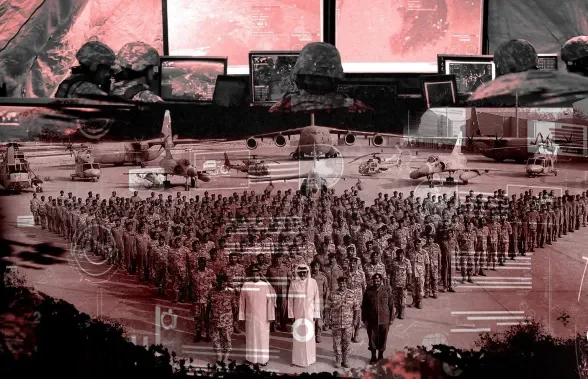
Arab governments may hold legal titles to some of the world’s most advanced weapons, but ownership does not confer operational sovereignty. A fighter jet without approved ammunition, spare parts, software updates, mission data, or qualified personnel for maintenance is an expensive asset sitting on a runway.
Washington doesn’t need a secret button to shut down an ally’s arsenal. Controlling the system surrounding the weapon can achieve the same result – gradually, selectively, and under the guise of treaties, export rules, and routine technical assistance.
The arsenal behind the protective shield
According to Stockholm International Peace Research Institute (SIPRI) data for 2021-25, the US supplied 54 percent of all major arms imported by states in the Middle East. Saudi Arabia alone accounted for 6.8 percent of global arms imports, while Qatar accounted for 6.4 percent and Kuwait for 2.8 percent.
These purchases include fighter jets, air and missile defence systems, precision weapons, sensors, and command and control systems. Each platform also binds the buyer to the supplier’s technical ecosystem for years to come.
This ecosystem now forms a large part of the Gulf’s high-quality defence architecture. Saudi Arabia’s US-supplied inventory includes F-15 fighter jets, Patriot air defence systems, attack helicopters, and precision-guided munitions. The UAE operates F-16E/F fighter jets, Patriot batteries, and THAAD, while Qatar has built its air arm around F-15QA fighter jets and Patriot air defence systems.
These systems are designed to work together through radar coverage, secure communications, identification systems, training, and US-compliant doctrine. The interdependence therefore extends beyond individual weapons. Disruption of one support layer can reduce the effectiveness of several interconnected capabilities.
The dependency is evident in Washington’s own rules. The Defence Security Cooperation Agency refers to larger foreign military sales as a “Total Package Approach” – an approach that includes not only the platform but also training, technical assistance, software, ammunition, follow-up support, and intelligence mission data.
Each element is simultaneously a potential control point. A buyer can own the aircraft frame, while relying on the US for the data that defines threats, the software that integrates sensors, the missiles that arm it, and the expertise that puts it back into service. This is the institutional foundation under the so-called American security umbrella.
No magic switch required
Public debate often reduces this relationship to a literal remote-controlled “kill switch.” The Pentagon’s F-35 Joint Program Office denied in 2025 that such a switch existed, stating that there was no verified public evidence that Washington could issue an order instantly grounding every exported U.S. aircraft or disabling every missile.
This denial addresses the narrowest version of the claim. It does not eliminate the underlying dependency. Modern weapons are sustained by software releases, cryptographic material, threat libraries, proprietary testing equipment, source-controlled components, and supply chains that remain outside the sovereign control of the buyer.
The F-35 makes this structure unusually visible. Its Autonomic Logistics Information System (ALIS) is being replaced by the Operational Data Integrated Network (ODIN). The program office describes ALIS as the system that transforms aircraft maintenance data into decisions that keep fighter jets airworthy, while the US Government Accountability Office has documented the difficulties surrounding its replacement.
Foreign operators will not have unrestricted control over the aircraft’s core software. The US even decided to withhold the F-35 source code from partner countries. This does not mean that a jet requires Washington’s approval before every take-off, but it places long-term modernization, fault diagnosis, mission data support, and much of the maintenance chain within a US-run system.
The limits of GPS control
The same distinction applies to satellite-guided weapons. JDAM kits, Excalibur artillery shells, and other precision munitions use GPS in conjunction with inertial navigation. Their reliance on a US-operated satellite system creates a clear strategic vulnerability, particularly where access to encrypted military signals, updates, or compatible mission planning equipment is limited.
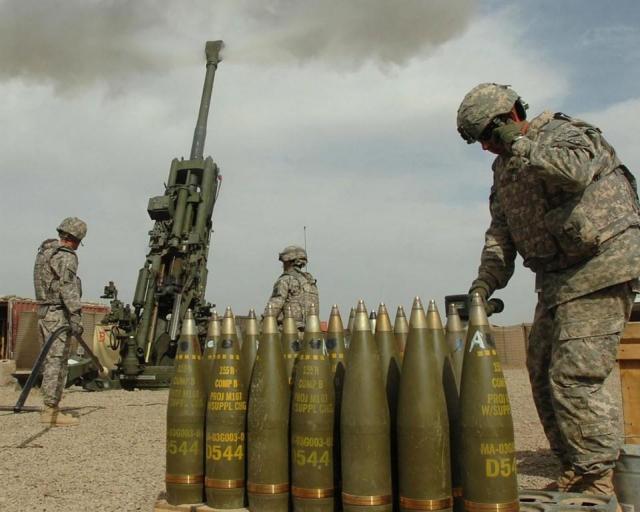
However, the claim that Washington could revive Selective Availability to downgrade civilian or exported GPS over a specific country is inaccurate. The US government ended Selective Availability in May 2000 and later removed the feature from new GPS satellites. Furthermore, the old mechanism affected the constellation globally, rather than creating a proper, country-sized exclusion zone.
The loss or denial of GPS would not necessarily turn every guided weapon into an unguided one. Systems that combine satellite and inertial navigation may retain some capability, usually with reduced accuracy. Nor is there any credible publicly available evidence that Excalibur missiles or modern anti-tank missiles contain a remotely activated US software lock that would cause a launching system to reject them as “unverified.”
Washington’s real leverage lies elsewhere. It controls which munitions are exported, in what quantities, which upgrades and encryption standards are approved, and whether depleted stockpiles are replenished in times of war. An arsenal can be neutralized without a single invisible signal ever crossing the skies.
Saudi Arabia: The plane stays, the mission changes
Saudi Arabia’s F-15 fleet illustrates the difference between owning a platform and controlling its full combat potential. In February 2026, the US approved a potential $3 billion F-15 maintenance package that includes spare and repair parts, classified and unclassified software, technical documentation, training, and support from the US government and contractors.
The package does not include a new fleet of fighter jets. Its value lies in keeping the existing fleet operational – revealing how a fighter jet remains bound to decisions made long after its initial sale.
This dependence became political leverage during the Yemen war. In February 2021, former US President Joe Biden declared: “We are ending all American support for offensive operations in the Yemen war, including relevant arms sales.”
The White House statement simultaneously promised continued support for Saudi Arabia’s territorial defence. Riyadh retained its aircraft and air defence systems, but Washington drew a line between the missions it would continue to permit and those it would restrict.
The restrictions on certain offensive transfers were lifted in 2024 – confirming that the tap could be turned off and on again by political decision.
Iraq’s F-16 fleet remains tied to US contractors
Iraq purchased 36 F-16s from the US, but the fleet’s operational readiness remained heavily dependent on American specialists. In May 2021, Lockheed Martin withdrew its maintenance team from Balad Air Base after repeated attacks by insurgency groups.
The decision was made for security reasons, not as a punishment by Washington. Its military implications, however, were revealing. The trade journal Air & Space Forces Magazine reported that the withdrawal would likely restrict fleet operations.
The incident exposed the extent of Iraq’s dependence. If the withdrawal of contractors could restrict fleet operations, Washington could exert similar pressure by suspending export licenses, contracts, or technical assistance. Iraq owned the jets, but not the complete support chain needed to keep them airworthy.
The UAE is negotiating the limits of sovereignty.
The Emirati case demonstrates that leverage can be exerted even before a platform arrives. A proposed $23 billion package included 50 F-35 fighter jets, up to 18 armed MQ-9 drones, and advanced munitions. Negotiations stalled due to US concerns about China’s technological presence in the UAE and the conditions attached to operating the aircraft. Explaining Abu Dhabi’s suspension of talks in 2021, an Emirati official cited “technical requirements, sovereign operational constraints, and a cost-benefit analysis.”
These “sovereign operational restrictions” laid bare the limits of the deal. Washington didn’t have to disable Emirati aircraft; it used its grip on the technology to dictate access conditions before a single jet was delivered. The kill switch was built into the sale itself.
Washington turns off the tap for Turkey
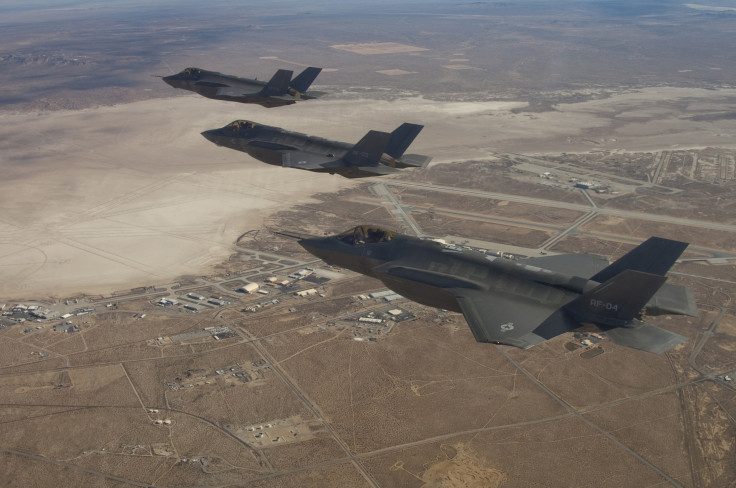
Turkey provides the clearest regional case. It was not merely an F-35 customer, but a NATO ally and manufacturing partner that produced hundreds of components. Turkish companies had invested in the program, Ankara had paid approximately $1.4 billion, and Turkish pilots had already begun training in the United States.
After Ankara accepted the Russian S-400 air defence system, the Pentagon removed Turkey from the F-35 program. A senior US defence official stated, “Turkey can choose the S-400 or the F-35. It cannot have both.” The Pentagon then began to unwind Turkey’s participation, regardless of Ankara’s investments, industrial role, and alliance status.
The incident is more concrete than claims that US software would prevent a Turkish F-35 from targeting Greek forces. There is no credible public evidence that NATO IFF coding automatically prevents weapons from being locked onto allied aircraft and ships, or that Washington can remotely control a Turkish mission computer once a target has been selected.
Washington’s power was exerted long before the aircraft could even take off. It blocked the delivery, excluded Turkish companies from the production chain, ended pilot training, and denied access to software and maintenance. The aircraft didn’t need to be remotely grounded because the US ensured Turkey never received it.
Ankara’s response was to place greater emphasis on the domestically developed KAAN fighter jet and to seek alternative procurement channels. Nevertheless, Turkey has continued to pursue a return to the F-35 program, with President Recep Tayyip Erdoğan stating in 2025 that technical talks had resumed.
An architecture of permission
None of these cases proves that Washington possesses a hidden code capable of remotely disabling any exported weapon. Nor does it need one. The real kill switch operates through ammunition permits, spare parts, software, technical data, contractors, training, mission files, and upgrades.
Each point of pressure can be presented as an ordinary administrative, legal, or contractual decision. Together, they define the limits of military autonomy and allow Washington to selectively impose costs without announcing that an ally’s arsenal has been shut down.
Washington’s leverage has its limits. Arab states can turn to European or Chinese suppliers or develop weapons domestically, while US pressure doesn’t always force a change in policy. But replacing an established military system takes years, and combat readiness can’t wait.
Arab states possess the hardware, while Washington retains significant influence over the operational readiness of these weapons, the missions they can sustain, and the strategic decisions they can support.
yogaesoteric
September 23, 2026