
Redefining Healing – A Holistic Approach to Cancer Prevention
Health is shaped by more than the absence of disease. It reflects how your body performs each day, how effectively it repairs and recovers, and how well daily habits nourish its needs. In many ways, modern life often undermines these foundations. Holistic healing responds to this reality by addressing the whole picture – the physical, psychic, and environmental influences that determine long-term health.

Dr. Leigh Erin Connealy, founder of the Cancer Center for Healing and the Center for New Medicine in Irvine, California, and a physician with more than 30 years of experience in integrative medicine, explored these principles in a recent podcast. In the featured video at the end of the article, she shared her perspectives on prevention, longevity, and practical measures that support lasting health.
The Worsening State of Health in the US
The United States faces a deepening health crisis despite investing more in medical care per person than any other nation. By almost every measure of population health – from life expectancy to rates of chronic disease and psychic illness – the trend lines are moving in the wrong direction.
Poor global ranking despite high spending – According to Connealy, the U.S. ranked 69th in global healthcare performance in 2024, a position that reflects an overall decline in outcomes even as technology and treatment capabilities advance. Life expectancy has fallen for three consecutive years, underscoring the scale and persistence of the problem.
This decline is not limited to older adults – Chronic conditions are emerging earlier in life. Connealy notes that autism in California is now diagnosed in one out of every 22 children, while in other states the rate is one in 35. Diabetes affects one in three children, a condition once considered rare in this age group. By the time they reach elementary school, 60% of young kids have at least one chronic illness.
Psychic health in young people is also deteriorating – Teenagers are now experiencing the highest recorded rates of anxiety and depression, and suicide has become a leading cause of death in this age group. Emotional health is inseparably linked to physical health, and the decline in both is creating a generation at greater risk for lifelong health struggles.
Cancer Is Striking Younger – Early Detection Needs to Go Beyond Standard Tests
Cancer develops silently over many years before it is formally diagnosed, progressing quietly without obvious symptoms. By the time most cancers are found, they have been growing, changing, and interacting with the body’s systems for a significant period.
Rising rates in younger adults – Between 1990 and 2019, there has been an 80% increase in cancer cases. Connealy notes that many of her new patients are in their 20s, 30s, and early 40s. These include advanced-stage diagnoses, such as Stage 4 colon cancer, which were once considered rare in these age groups. The shift challenges the long-standing view of cancer as a disease that primarily affects older people.
Addressing cancer begins long before the moment of diagnosis – According to Connealy, she looks at the full span of a patient’s life in the years leading up to their illness to assemble a complete picture of the patient’s physical and environmental landscape during the period in which cancer is most likely to have begun. As she explains:
“There are some aspects I go through when I see a patient. I go back from inception to where they are right now, and everything that’s occurred to them, meaning not just how they sleep, the water they drink, the food they eat, the exercise they do or don’t do, their mouth, and their stress over the last 8 to 10 years. So, I get to know a lot about them. I’m aiming to figure out all the elements that contributed to the development because the cause is not just one isolated element.”
Comprehensive early detection strategy – To identify cancer as early as possible and understand the factors influencing its development, Connealy uses a range of advanced diagnostic tools. These methods go beyond standard protocols and are selected to provide a comprehensive view of a patient’s health from multiple angles, including:
- Advanced blood testing – Measures inflammation, hormone balance, nutrient levels, and other internal markers that indicate cancer risk or progression.
- Circulating tumour cell testing – Detects cancer activity in the blood before tumours become visible, using specialized international labs.
- Whole-body MRI – Scans for solid tumours and abnormalities without significant radiation exposure, providing a broad view of the body.
- Thermography and ultrasound – Identifies abnormal vascular patterns and tissue changes, especially useful for dense breast tissue.
- Nutritional and toxic load analysis – Evaluates nutrient status and toxic elements inside cells to identify imbalances that may influence cancer risk.
- Energy and frequency assessments – Uses non-invasive scanning to detect disruptions in the body’s electrical and energetic systems.
Risk-specific screening is another hallmark of her approach – Testing recommendations are tailored based on a patient’s genetics, family history, and existing conditions. The intention is to apply the most appropriate and least invasive methods for each person’s risk profile.
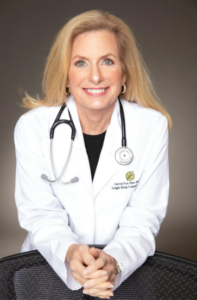
By combining a detailed life history, advanced laboratory and imaging technologies, and personalized screening protocols, Connealy builds a multifaceted view of each patient’s cancer risk and current health status. This thorough and personal approach is designed to both detect disease earlier and provide the necessary information for developing a targeted, patient-specific management plan.
Integrative Therapies for Cancer Care and Prevention
In the interview, Connealy outlines a prevention and treatment approach that combines nutritional, detoxification, oxygenation, and other advanced therapies. Each strategy is tailored to the person and designed to strengthen the body’s defences, remove harmful influences, and create an internal environment less favourable to disease.
Personalized nutrition plans – Connealy emphasizes the role of food as a foundation for both cancer prevention and supportive care during treatment. In the interview, she stressed the importance of creating daily conditions that promote recovery and resilience, starting with diet.
“You need to really think about your food. You need to eat nutrient-dense food. And really, you eat like your ancestors ate,” she noted. She advises avoiding harmful fats such as processed seed oils, eliminating refined sugar, and choosing nutrient-dense options like high-quality protein (eggs, legumes, nuts), organic fruits and vegetables, and raw dairy from reliable sources.
Targeted supplementation – Supplement choices follow what shows up in labs and history. Intravenous vitamin C is at the centre of her protocol, used daily and in higher doses when needed. She recommends camu camu as a valuable whole-food source of this nutrient, particularly suited for younger people.
Detoxification therapies – Reducing your body’s toxic burden supports immunity and mitochondrial function. Connealy suggests simple at-home practices such as Epsom salt and baking soda baths, sometimes combined with clay, to encourage relaxation and assist detoxification. She also recommends using an infrared sauna when available.
Oxygen-based treatments – Connealy uses ozone to raise tissue oxygen delivery and reduce microbial stress, and incorporates hyperbaric oxygen therapy where appropriate to increase dissolved oxygen in plasma. These methods support energy production and recovery while other parts of the plan address nutrition, toxins, and infections.
Physical and biophysical therapies – She also shares that she uses pulsed electromagnetic field (PEMF) therapy to stimulate cellular repair and promote energy production. Moreover, she uses intravascular laser therapy with different wavelengths to influence mitochondrial activity and blood properties from within the vasculature, and full-body red-light beds for broad photobiomodulation.
Building Lifelong Wellness at Home Through Daily Lifestyle Habits
Daily decision-making is a central driver of long-term health. Connealy describes health as a continuous process rather than an occasional effort, and she links preventive strategies to the years before illness develops, extending even to the period before conception.
Building a strong health foundation before pregnancy – Optimizing the health of both parents prior to conception influences the health of future children. Beyond that stage, she advises patients to take an active role in their medical decisions, ask questions, and work with practitioners who tailor recommendations to each person’s history and needs.
Psychic and emotional habits as part of healing – Emotional well-being is just as important as physical health. Thus, meditation and awareness practices are essential in both prevention and recovery plans. Beneficial affirmations before sleep help reinforce constructive beliefs at a subconscious level, while beginning the day with gratitude and intention sets a stable tone. Introducing children to daily meditation for 10 to 15 minutes also helps calm their consciousness, improve focus, and support emotional regulation.
Excellence over perfectionism – Connealy advises aiming for steady, sustainable progress rather than holding to rigid standards. Having a clear sense of purpose, personal values, and inner stability helps maintain perspective and guide one’s decision-making during challenging times.
Modelling healthy habits for children – Lead the children by example when teaching healthy behaviours. Explaining the reasons behind such choices helps them understand their value and encourages them to make informed decisions on their own.
Prioritizing daily movement and time outdoors – Regular exposure to natural light, fresh air, and moderate physical activity (such as walking in a park) helps regulate sleep, elevate mood, and support physical development. Making these elements part of the family’s daily rhythm turns them into reliable, lasting habits.
By making these practices a consistent part of daily life, you create conditions where health is continually supported.
Author: Dr. Joseph Mercola
yogaesoteric
September 7, 2026