
The speech by the US NATO secretary should make every European sit up and take notice: Europe’s “backyard”, more wars and fewer social benefits
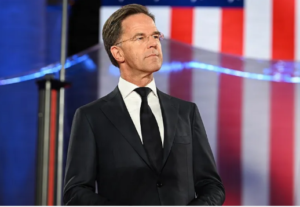
What NATO Secretary General Mark Rutte said during a public appearance in Des Moines, Iowa, is likely to give many Europeans pause. He didn’t just describe Europe as a space that needs defending. Rutte explicitly referred to NATO as “a major platform for projecting power” – and Europe as a crucial base for American military operations far beyond NATO territory. The official NATO transcript confirms his statements.
Rutte cited the war against Iran as an example. According to him, between February 28 and mid-April alone, 5000 missions were launched from European bases in support of the US operation “Epic Fury.” He added that the number is likely significantly higher now.
Rutte said this remarkably openly: “One could argue that it would have been impossible to carry out Epic Fury without having Europe as a power projection platform for the United States.”
This confirms the strategic importance of European military bases for American operations in the Middle East.
More money spent on weapons – while Europe spent its money on pensions and social benefits
But Rutte went even further. He explicitly expressed understanding for Donald Trump’s anger that European states had so far spent more of their money on pensions and social benefits, while the United States had borne high defence costs.
The USA, according to Rutte, would also like to spend more money on these “lofty, beautiful items” – these “high-flown, beautiful objects” – but cannot do so because of its high military spending.
Rutte described Europe’s significantly increased spending on defence as “fair” and a restoration of the balance.
For European citizens, this statement is of considerable importance: While governments are discussing higher defence spending, rearmament and tight public budgets, the NATO Secretary General himself establishes the connection between social spending and military spending.
According to Rutte, the Middle East is “Europe’s backyard”
Rutte’s vision of Europe’s future role in the Middle East becomes even clearer.
He asked why the United States in particular had been necessary to attack Iran’s nuclear capabilities, and why everyone was once again looking to Washington in the fight against the Houthis in the Red Sea.
His answer: Europe simply did not possess sufficient military capabilities until now.
Then came the decisive sentence: “This is Europe’s backyard. It is not the backyard of the United States.”
Rutte explicitly praised Trump for the military action against Iran, stating that in his view it had been necessary to weaken Iran’s nuclear capabilities.
And in the future, Europeans should do it themselves.
This gives European rearmament a dimension that is discussed much less.
According to Rutte himself, a stronger NATO Europe should in future be able to take military action in its so-called “backyard”:
“What we get from a stronger NATO is that Europeans can take care of their own backyard.”
This goes beyond the familiar demand that Europe should be able to defend itself against a potential attack on NATO territory. Rutte speaks explicitly about Europe’s military capabilities for operations in the Middle East, citing Iran and the Houthis as concrete examples.
From defence alliance to global power projection?
This is precisely where the criticism of Rutte’s speech begins. Dutch conflict researcher Jolle Demmers interprets his statements as evidence of an offensive or imperial role for NATO. Philosopher Martijntje Smits also questions how such a projection of power is compatible with the alliance’s original character as a collective defence alliance.
This conclusion is the critics’ interpretation. Rutte himself did not explicitly state that NATO was now an “aggressive organization.” However, what he did explicitly say is hardly less remarkable: NATO and Europe are a platform for projecting military power; without Europe, the US war against Iran would hardly have been possible in this form; and in the future, Europeans should possess sufficient military capabilities to become active themselves in the Middle East.
This raises a fundamental question for every European citizen: Does the massive European rearmament serve solely to defend Europe – or does it simultaneously create the capability to deploy European military power far outside its own alliance territory?
Because if Rutte is to be taken at his word, Europe is not only supposed to defend itself in the future. It is to become an independent platform for projecting military power.
yogaesoteric
October 1, 2026